
Pistol Ridge Land Services logoPistol RidgeLand Services
Excavator working on a large graded dirt site
Guides

Kentucky Dirt Work Guides: Answers & Costs

Plain answers from Pistol Ridge Land Services on what moves the price of a job and what the rules are in Kentucky, so you know what to ask before you call anybody. For a quote, call Trey at (270) 272-8739.

Start here

What Does It Cost?

Every cost guide explains what moves the price and how to get a real number for your job. Jump to a topic:
Cost Guide

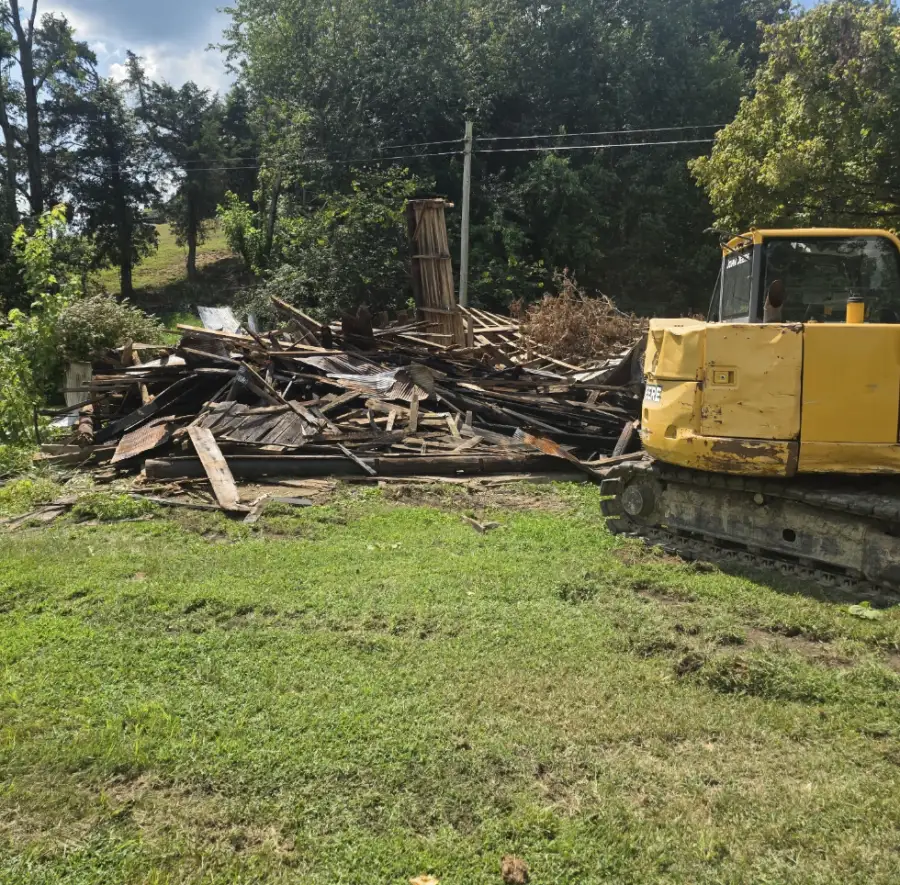
How Much Does It Cost to Tear Down a Barn in Kentucky?

The cost to tear down a barn in Kentucky comes down to how big it is, how it is built, how easy it is to reach, and how much debris has to be hauled away. The only real number is a quote from someone who has walked the barn, so call or send photos.

Read the article
Cost Guide

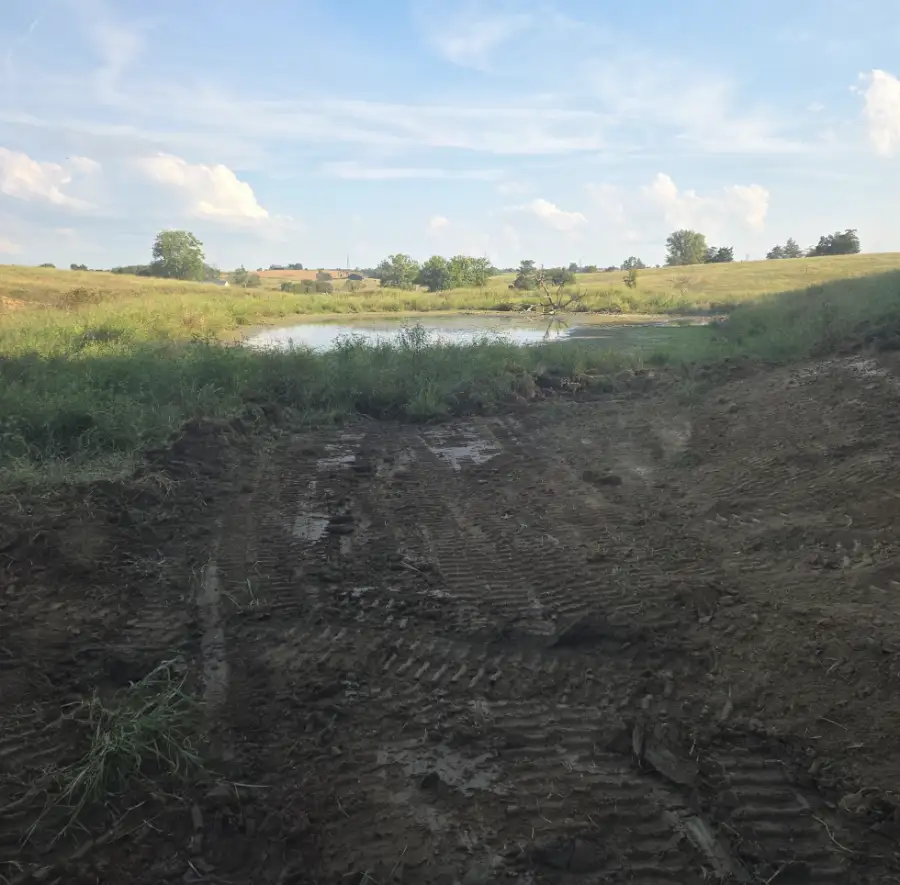
What Does It Cost to Clean Out a Farm Pond in Kentucky?

The cost of a pond cleanout comes down to how much silt is in the pond, whether the water can be drawn down, and where the muck goes once it is out. The only real number comes from someone looking at your pond, so call or send photos and Trey will tell you what he sees.

Read the article
Cost Guide

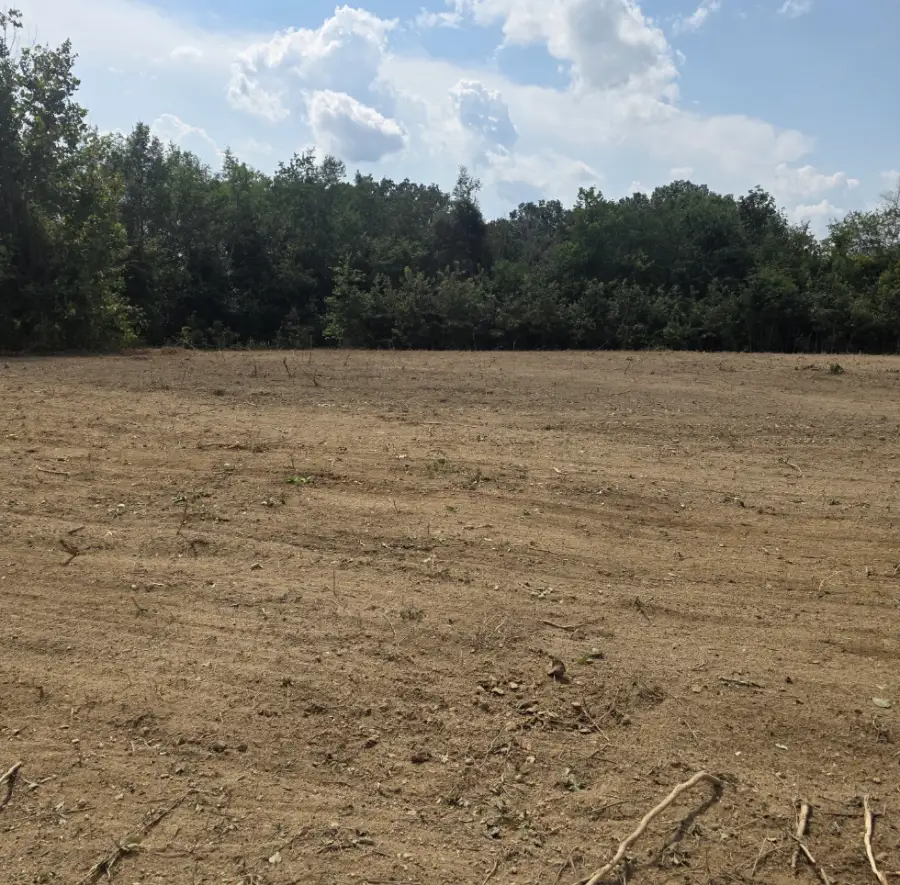
What Does Fence Row Clearing Cost in Kentucky?

The cost of clearing a fence row depends on how long it is, how big the trees in it have grown, and how much old wire is buried in them. A walk down the line with Trey is how you get a real number.

Read the article
Cost Guide

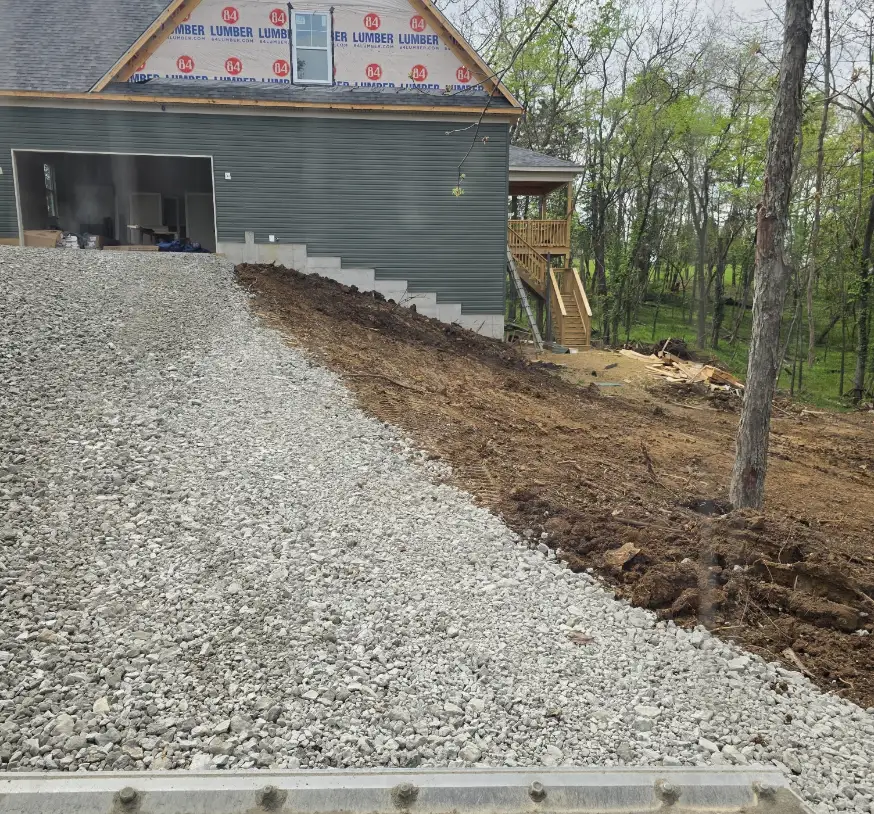
What Does a Pole Barn Pad Cost in Kentucky?

A pole barn pad costs what your ground makes it cost, so two 30x40 pads can be priced far apart. The size of the building matters less than the slope, the fill, the stone and how a truck gets there.

Read the article
Cost Guide

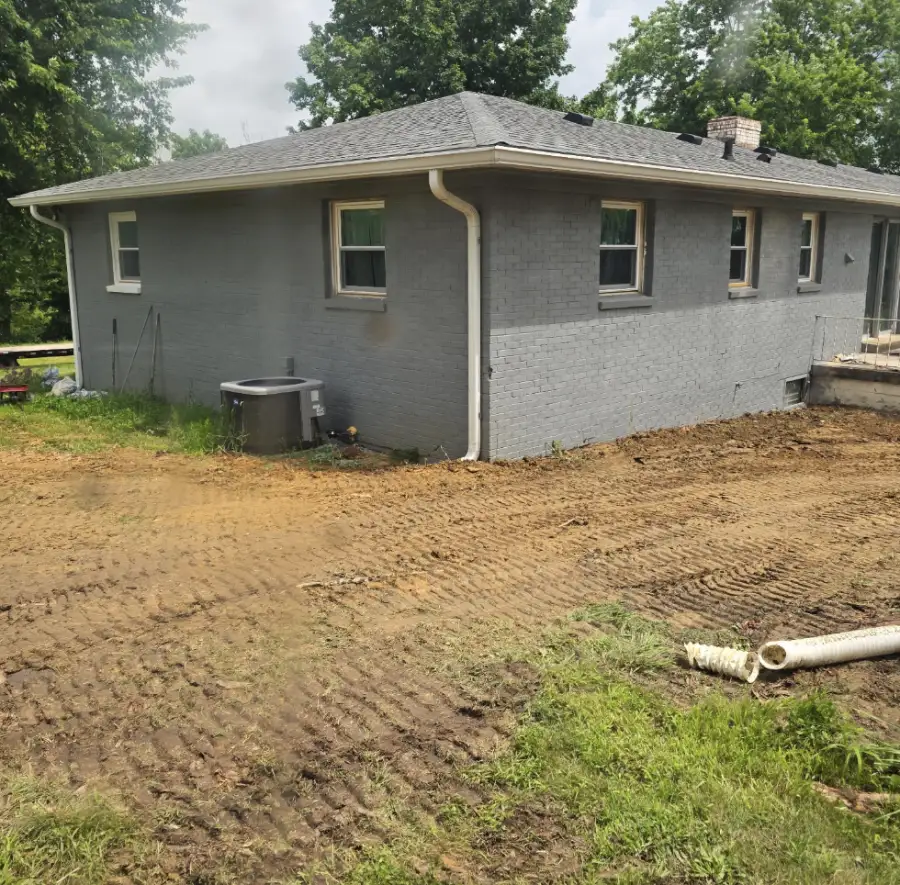
What Does Yard Drainage Grading Cost in Kentucky?

The cost of fixing yard drainage comes down to how much ground has to be reshaped, how much dirt has to come in or go out, and where the water can be sent. A look at the yard in or after a hard rain is how you get a real number.

Read the article
Cost Guide

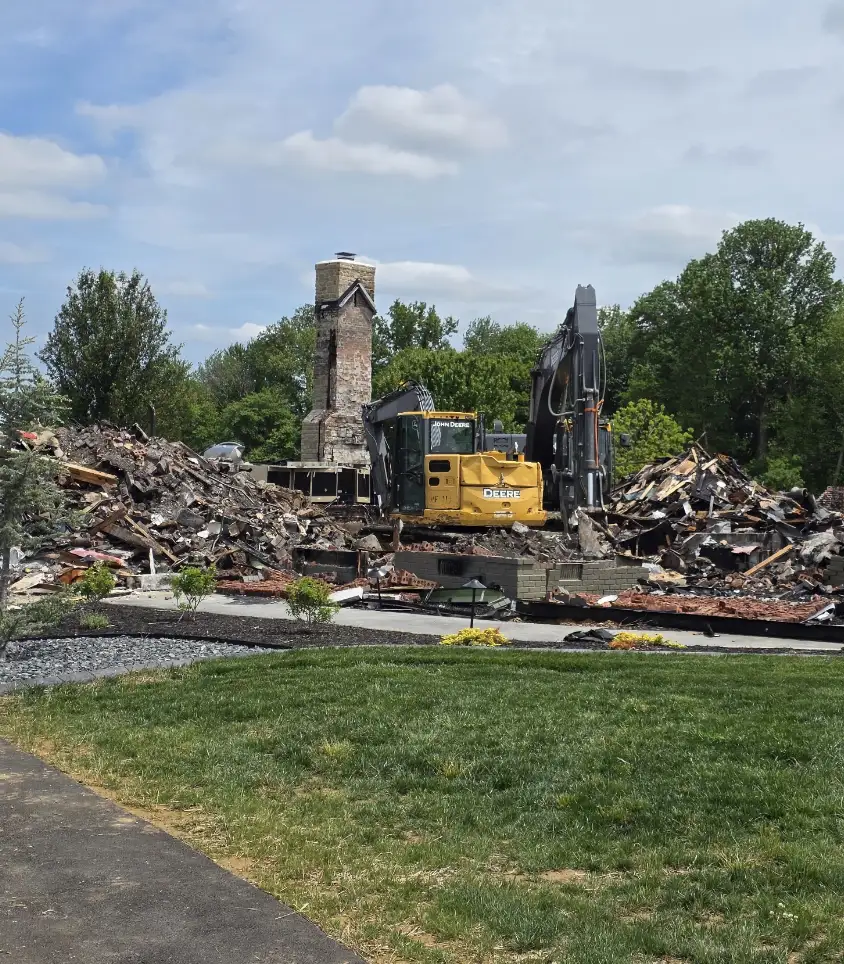
What Does It Cost to Demolish a House in Kentucky?

There's no honest one-size price for tearing down a house. Here's what actually moves the number, so you know what you're looking at before you call anybody.

Read the article
9 articles

Demolition

Tearing down a house, barn or burned building in Kentucky: permits, asbestos, cost and what is left afterwards.

Cost GuideHow Much Does It Cost to Tear Down a Barn in Kentucky?The cost to tear down a barn in Kentucky comes down to how big it is, how it is built, how easy it is to reach, and how much debris has to be hauled away. The only real number is a quote from someone who has walked the barn, so call or send photos.Read the articleCost GuideWhat Does It Cost to Demolish a House in Kentucky?There's no honest one-size price for tearing down a house. Here's what actually moves the number, so you know what you're looking at before you call anybody.Read the articleGuideShould You Tear Down an Old Barn?Tear down an old barn when it leans, the roof is open, or it stands where you need the ground, because a failing barn only gets more dangerous. Before it comes down, check with your city or county about any local rules or historic designation, and decide what tin and wood you want to save.Read the articleGuideCan You Tear Down a House Yourself?You can do a good share of the work on your own house tear-down, like emptying it, pulling fixtures and salvage, and taking down small outbuildings. Bringing down the house itself, pulling the footers and hauling off the debris is heavy, dangerous machine work, and the same Kentucky rules apply whether you do it or hire it out.Read the articleGuideShould You Tear Down or Remodel an Old House in Kentucky?Tear down an old house when the foundation, roof and water damage would cost close to what a new house costs, or when the layout will never suit you. Remodel when the bones are sound and the problems are mostly on the surface.Read the articleGuideHow Do You Demolish a Fire-Damaged House in Kentucky?Tearing down a burned house starts with paperwork: the insurance company and any fire investigator finish with the site, the utilities are disconnected, and the permit and asbestos questions are answered. Then the house comes down, the debris is sorted and hauled to a landfill, and the lot is cleaned to a slab, an empty basement or smooth ground.Read the articleGuideHow Do You Fill In a Basement After Tearing Down a House?To fill a basement after a tear-down, get the debris out, break up the floor so water can drain, then fill the hole with clean fill packed in layers. Finish with topsoil graded so water runs away from the spot.Read the articleGuideDo You Need an Asbestos Inspection to Demolish a House in Kentucky?One single-family house, or one apartment building with four or fewer units, is exempt from Kentucky's asbestos survey and notice rule, unless it is part of a larger project or was ever used commercially. A building that is not exempt needs a thorough asbestos survey and a notice to the Kentucky Division for Air Quality at least 10 working days before demolition.Read the articleGuideDo You Need a Permit to Tear Down a House in Kentucky?Whether you need a permit to tear down a house in Kentucky depends on the city or county the house sits in. Here is who to ask in central Kentucky, and the state rules that apply wherever the building stands.Read the article
11 articles

Ponds

Digging a new farm pond or cleaning out an old one: depth, watershed, soil, timing and cost.

Cost GuideWhat Does It Cost to Clean Out a Farm Pond in Kentucky?The cost of a pond cleanout comes down to how much silt is in the pond, whether the water can be drawn down, and where the muck goes once it is out. The only real number comes from someone looking at your pond, so call or send photos and Trey will tell you what he sees.Read the articleCost GuideWhat Does It Cost to Dig a Pond in Kentucky?A pond is one of the best things you can add to a piece of Kentucky land, and one of the easiest to get wrong. The cost comes down to a handful of things.Read the articleGuideCan You Use a Mini Excavator to Dig a Pond?Yes, a mini excavator can dig a small pond, like a garden or wildlife pond, and it is handy for tight access and cleanout edges. A real farm pond with a dam needs a full-size excavator, because the job is moving a lot of dirt and building a packed clay core that holds water.Read the articleGuideHow Often Should a Pond Be Cleaned Out?There is no set schedule for cleaning a pond: it needs a cleanout when silt has filled in enough depth that the shallow water warms, weeds and cattails spread, and the pond no longer does its job. How fast that happens depends mostly on how much soil washes in from the land that drains into it.Read the articleGuideShould You Leave Trees on a Pond Dam?No. Kentucky Fish and Wildlife says to keep a pond dam free of trees, because they can cause leaks and attract burrowing rodents, and the dam should be mowed regularly so woody growth never gets a start.Read the articleGuideWhen Is the Best Time to Dig a Pond in Kentucky?In Kentucky, most pond building is done from late summer into fall, when the ground is firm enough for heavy machines and the clay can be worked and packed. A pond finished then has the winter and spring rains ahead of it to fill, but the weather and your site decide the real dates.Read the articleGuideWill My Land Hold Water for a Pond?A pond holds water when it sits on a layer of soil that water will not seep through, and there is enough clay on site to build the core of the dam. Ground with limestone close to the surface, sinkholes or other karst features can drain a pond that looks well built, and that kind of ground is found in many Kentucky counties.Read the articleGuideHow Many Acres of Watershed Does a Kentucky Pond Need?Kentucky Fish and Wildlife says it normally takes 10 to 15 acres of land draining to a pond to fill and keep up a one-acre pond. Too little watershed and the pond fills slowly and drops in summer, and too much sends more storm water at the dam than it was built to handle.Read the articleGuideHow Deep Should a Farm Pond Be in Kentucky?Kentucky Fish and Wildlife recommends a farm pond average at least 6 feet deep, with the deepest spot at 12 to 15 feet. The edges should drop off fast so very little of the pond is shallower than 2 to 3 feet, because shallow water is where weeds take hold.Read the articleGuideDo You Need a Permit to Build a Pond in Kentucky?Most farm ponds in Kentucky are smaller than the size that needs a state dam permit, but that is not the same as having no rules to check. Here is what the state looks at, who to call, and what makes a site hold water once the paperwork is settled.Read the articleGuideCan You Get Cost-Share Help for a Farm Pond in Kentucky?Sometimes. Two programs help pay for conservation work on Kentucky farms: the state's Soil Erosion and Water Quality Cost Share program, through your county conservation district, and USDA's EQIP, through the NRCS. Whether your pond qualifies is their decision, and with both you ask before any digging starts.Read the article
8 articles

Pads & Driveways

Building pads, pole barn pads and gravel driveways: what goes into them and what moves the price.

Cost GuideWhat Does a Pole Barn Pad Cost in Kentucky?A pole barn pad costs what your ground makes it cost, so two 30x40 pads can be priced far apart. The size of the building matters less than the slope, the fill, the stone and how a truck gets there.Read the articleCost GuideWhat Does a Building Pad Cost in Kentucky?Two pads the same size can cost very different amounts, because the building is not what you are paying for. The ground under it is. Here is what changes the number.Read the articleCost GuideWhat Does a Gravel Driveway Cost in Kentucky?People ask for a price per foot, and two drives of the same length can come out far apart. Here is what actually moves the number on a gravel driveway in Kentucky.Read the articleGuideDo I Need a Permit for a Pole Barn on a Farm in Kentucky?Kentucky has a farmstead exemption that can take a qualifying farm building, like a pole barn used for the farm, out of the state building code's permit and inspection rules. Whether your barn qualifies, and what local rules still apply, is a question for your county office before you build.Read the articleGuideHow Long Does a Gravel Driveway Last?A gravel driveway built on a firm, well-drained base can last for many years, as long as the top stone is added to now and then. One built on soft ground with no crown or ditches can rut and wash out within a season or two, no matter how much gravel is dumped on it.Read the articleGuideWhat Is a Building Pad and Why Do You Need One?A building pad is a level, compacted base, usually built a little higher than the ground around it, that a house, shop or barn sits on. It keeps the building dry and keeps it from settling, because the soft dirt has been taken out and the fill packed tight.Read the articleGuideHow Thick Should a Pole Barn Gravel Floor Be?One post-frame builder's published site guide calls for about 8 inches of stone: roughly 6 inches of #2 base under a 2 inch topper, crowned so water runs off. Treat that as a common starting point, because your soil, your building and your builder's site sheet decide the real number.Read the articleGuideDo You Need a Permit for a Driveway Entrance in Kentucky?If the new drive meets a state highway, yes. Kentucky law requires a permit for any encroachment on a state highway right-of-way, and the Transportation Cabinet lists new and replacement driveways among the jobs that need one. On a county road or a city street, the county or city sets the rules, so ask them before the drive is built.Read the article
7 articles

Digging & Drainage

Excavation, basements, trenches for water and electric lines, 811 and fixing a wet yard.

Cost GuideWhat Does Yard Drainage Grading Cost in Kentucky?The cost of fixing yard drainage comes down to how much ground has to be reshaped, how much dirt has to come in or go out, and where the water can be sent. A look at the yard in or after a hard rain is how you get a real number.Read the articleCost GuideWhat Does Trenching for a Water or Electric Line Cost in Kentucky?Trenching cost in Kentucky is set mostly by how long the trench runs, how deep it has to go and whether the machine hits rock. Tell us where the line starts and ends and what is going in it, and you can get a real quote instead of a guess.Read the articleCost GuideWhat Does Basement Excavation Cost in Kentucky?The cost of digging a basement in Kentucky comes down to how much dirt comes out, whether you hit limestone, and where that dirt has to go. The only real number is a quote built from your house plans and a look at the lot.Read the articleCost GuideWhat Does Excavation Cost in Kentucky?Nobody can price a dig from the road, and anybody who does is guessing. Here is what an excavation quote is really made of, so you can tell a fair one from a wild one.Read the articleGuideFrench Drain vs Grading: Which Fixes a Wet Yard?If water runs across the surface toward your house or sits in a low spot, regrading the ground to slope away usually fixes it. A French drain is for water coming up from below, or for spots where the ground cannot be reshaped.Read the articleGuideDo I Have to Call 811 Before Digging on My Own Land in Kentucky?Yes. Kentucky law requires notice to Kentucky 811 at least two and no more than ten full working days before digging with machines, and a ticket is good for 21 days. Hand digging on private property outside any utility easement and farm tilling are exempt, but digging with machines is not.Read the articleGuideHow Deep Does a Water Line Need to Be in Kentucky?At least 30 inches. Kentucky's plumbing regulation, 815 KAR 20:120, says a water service shall be installed at least 30 inches deep. Your water district or plumbing inspector can ask for more, so get their number before the trench is dug.Read the article
Common questions

The Short Version

The first lines of some of the articles, for when you only need the answer. Each one links to the full article.

Can You Use a Mini Excavator to Dig a Pond?

Yes, a mini excavator can dig a small pond, like a garden or wildlife pond, and it is handy for tight access and cleanout edges. A real farm pond with a dam needs a full-size excavator, because the job is moving a lot of dirt and building a packed clay core that holds water. Read the full article.

How Often Should a Pond Be Cleaned Out?

There is no set schedule for cleaning a pond: it needs a cleanout when silt has filled in enough depth that the shallow water warms, weeds and cattails spread, and the pond no longer does its job. How fast that happens depends mostly on how much soil washes in from the land that drains into it. Read the full article.

Should You Tear Down an Old Barn?

Tear down an old barn when it leans, the roof is open, or it stands where you need the ground, because a failing barn only gets more dangerous. Before it comes down, check with your city or county about any local rules or historic designation, and decide what tin and wood you want to save. Read the full article.

Can You Tear Down a House Yourself?

You can do a good share of the work on your own house tear-down, like emptying it, pulling fixtures and salvage, and taking down small outbuildings. Bringing down the house itself, pulling the footers and hauling off the debris is heavy, dangerous machine work, and the same Kentucky rules apply whether you do it or hire it out. Read the full article.

French Drain vs Grading: Which Fixes a Wet Yard?

If water runs across the surface toward your house or sits in a low spot, regrading the ground to slope away usually fixes it. A French drain is for water coming up from below, or for spots where the ground cannot be reshaped. Read the full article.

Do I Have to Call 811 Before Digging on My Own Land in Kentucky?

Yes. Kentucky law requires notice to Kentucky 811 at least two and no more than ten full working days before digging with machines, and a ticket is good for 21 days. Hand digging on private property outside any utility easement and farm tilling are exempt, but digging with machines is not. Read the full article.

Every Job Is Different

Want a Number for Your Job?

Guides can only tell you what drives the cost. Trey looks at the site, talks through what you want and gives you a straight quote before any work starts.

  • Only your name and phone are required
  • Residential, farm and commercial jobs
  • Rather talk now? Call (270) 272-8739

Tell us about the job

Only your name and phone are required.

Call NowGet a Quote