
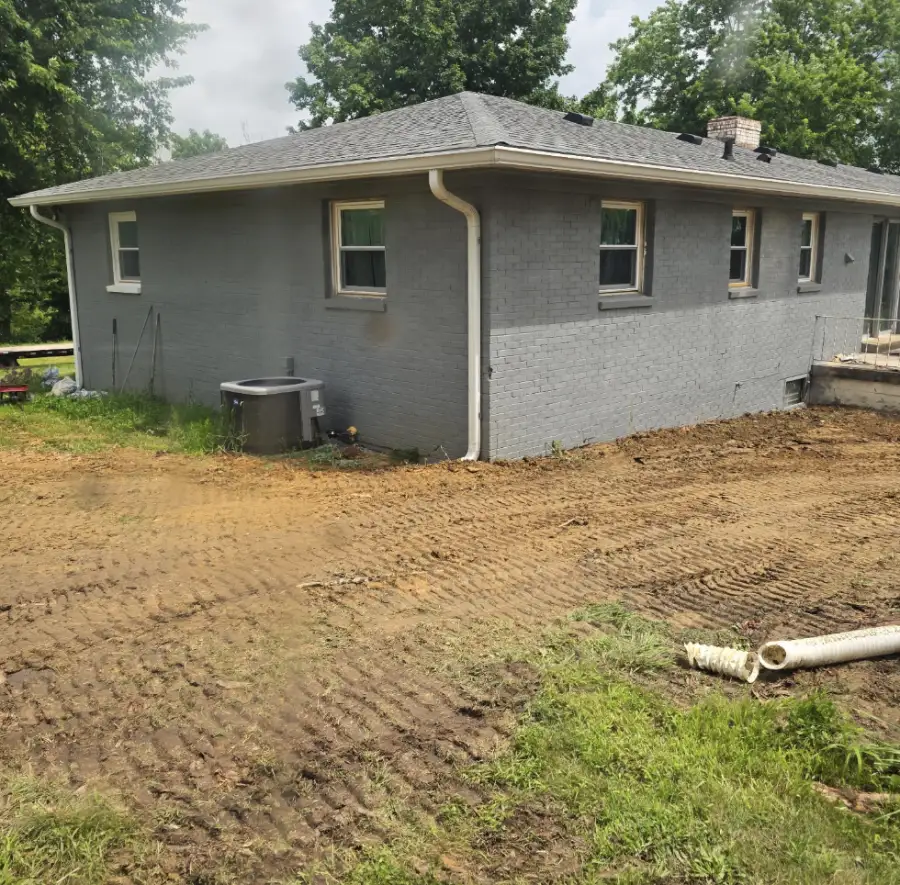
Yard Drainage Grading
Standing water and wet foundations fixed the simple way: by shaping the ground so the water runs off and away on its own.
Done Right the First Time
It rains on Tuesday and there is still a puddle by the back steps on Friday. Or the bed along the house stays dark and wet, and the block inside the crawl space is damp. Most of the time nothing is broken. The ground is just the wrong shape. Over the years the fill beside a foundation settles, flower beds get built up, and the yard ends up tilted toward the house instead of away from it.
Pistol Ridge Land Services fixes yard drainage in central Kentucky by regrading. Trey looks at where the water comes from and where it could go, then reshapes the ground so it gets there by gravity. That can mean building the grade back up along a wall, cutting a shallow swale across the yard, opening a ditch at the low side or taking out the hump that is holding water back. He does it with tracked skid steers and compact excavators that fit in a back yard.
When the work is done, water has a path. It leaves the foundation, crosses the yard in a swale you can mow over and ends up at a ditch, a draw or the road side where it was headed anyway. The low spots are filled, the surface is smooth and the dirt is ready for seed and straw. There is nothing buried to clog and nothing to plug in.
Drainage grading we do
- Building up grade along foundation walls
- Shallow swales you can mow across
- Open ditches at the low side
- Low spots filled and smoothed
- Humps that trap water taken out
- Finish grade left ready for seed
Water against the foundation
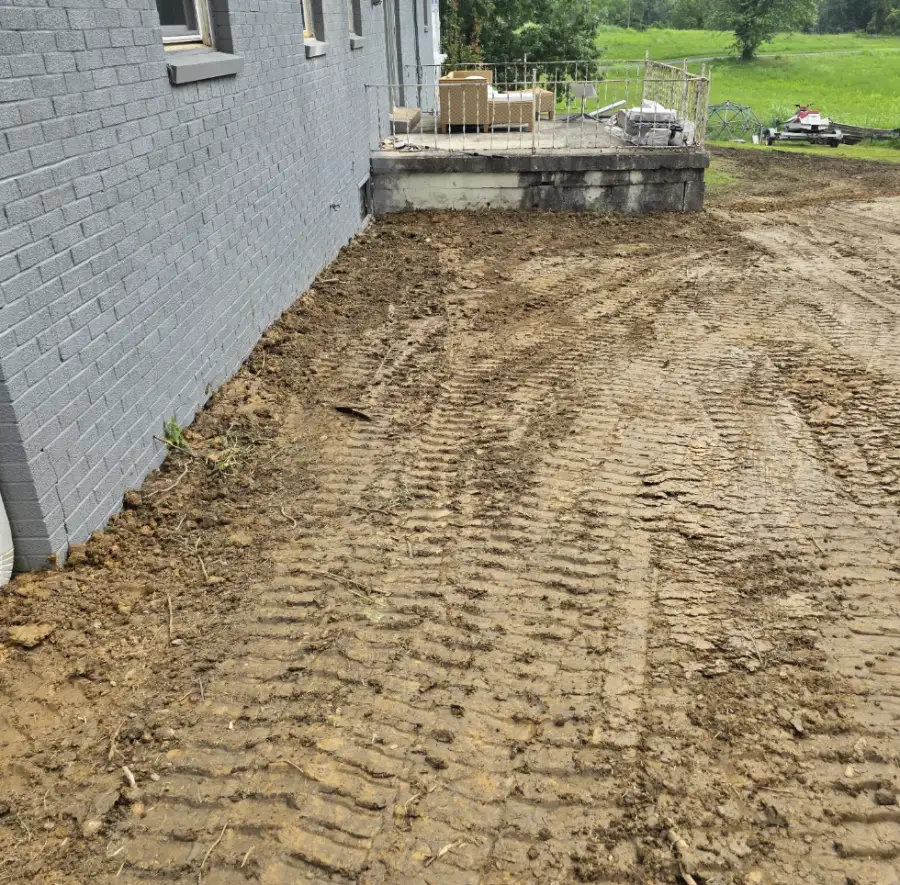
The ground should fall away from a house on every side. When it does not, rain and roof water soak in right at the wall. Trey builds the grade back up with clay fill, not loose topsoil, so it slopes away from the house, and he keeps the dirt below the siding and the weep holes in the brick. Clay sheds water where topsoil soaks it up. Past that first strip, the yard has to keep carrying the water, or the puddle has only been moved. So the slope by the wall is tied into a swale or the natural fall of the lot.
Standing water out in the yard
A wet spot in the yard is a bowl. Water runs in and has no way out. There are two fixes with dirt: fill the bowl so it is no longer low, or cut a way out for the water. On Kentucky clay the water will not soak away quickly on its own, so one of those has to happen. A swale is a wide, shallow dip with gentle sides, shaped so it carries water in a storm and looks like lawn the rest of the year. Where there is more water or less room, an open ditch does the same job.
What grading will not fix
We shape ground. We do not put in buried drain pipe, gravel-and-pipe trench drains, sump pumps, downspout lines or gutters. A lot of wet yards do not need any of that. Some do: a spring under the yard, a basement that takes in groundwater, a lot so flat and boxed in that there is nowhere to send surface water. If Trey looks at yours and grading alone will not solve it, he will say so, and a plumber or drainage specialist is the right call. For bigger regrading jobs, see yard and lot grading. For a new build, the fix starts with the pad.
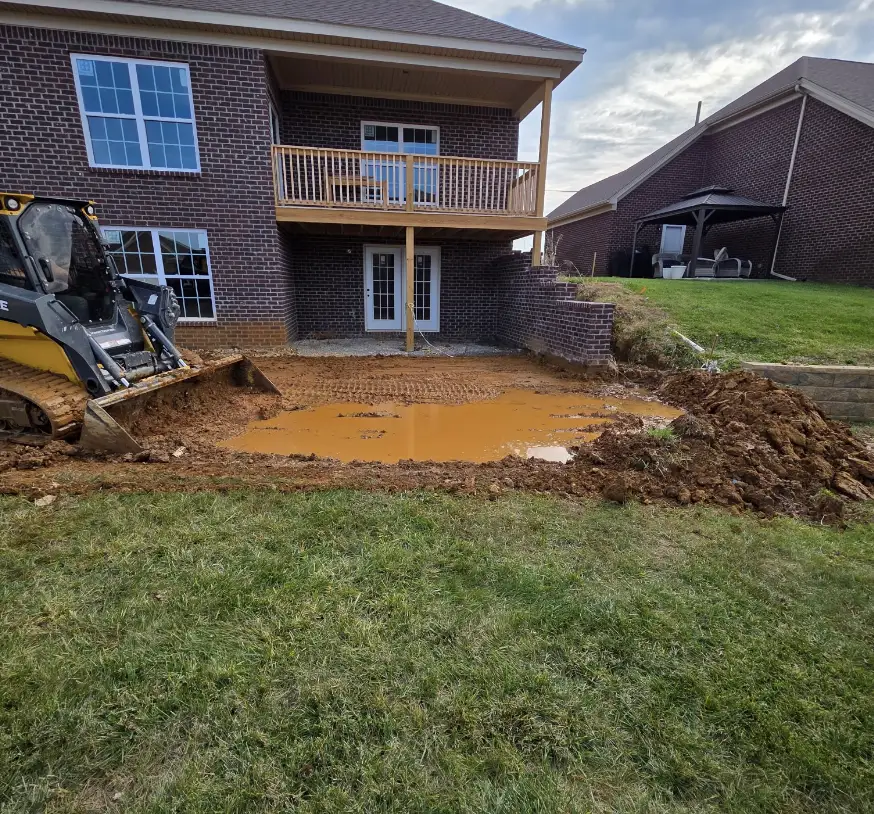
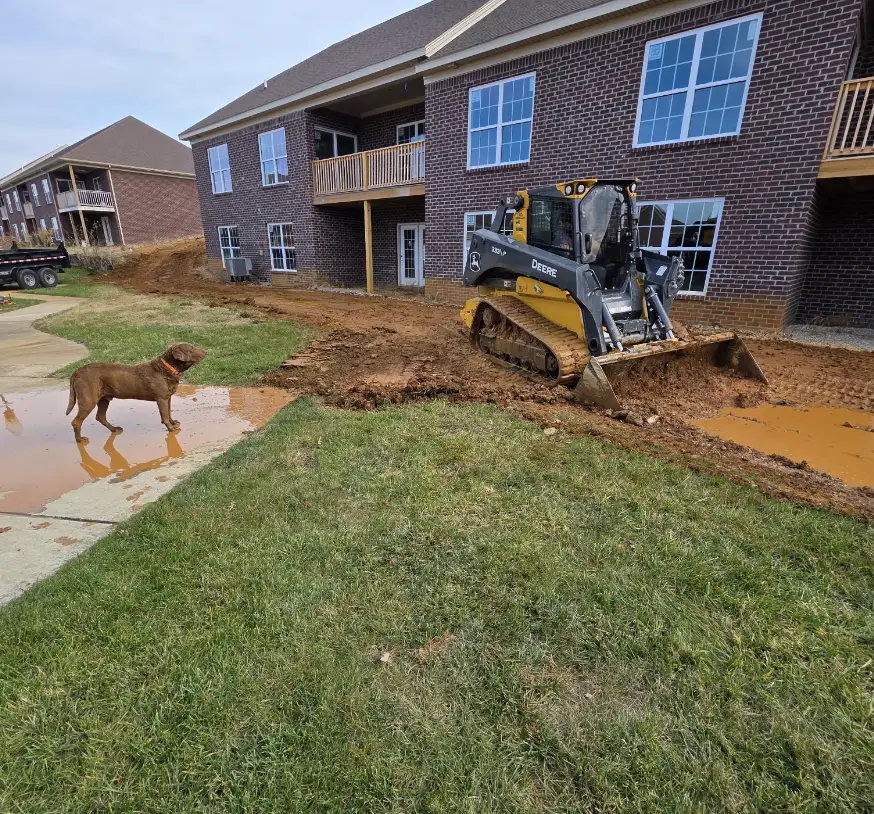
Yard Drainage Grading Jobs We've Done
Real photos from Pistol Ridge job sites. See more work.
From First Call to Final Pass
Reach Out
Call or send the form and tell us where the job is and what needs doing.
Walk the Site
We look at the ground, the access and the scope so there are no surprises.
Get a Quote
You get a straight quote and a plan for the work.
We Dig In
The machines roll in and the job gets done right.
Yard Drainage FAQ
Who do I call for standing water in my yard?
Start with whoever can tell you why it is standing there. If the yard is low, slopes the wrong way or has no outlet, that is a grading problem and it is our kind of work. If it is a broken pipe, a spring or a wet basement, a plumber or drainage specialist is the one to call.
Should I regrade my yard or put in a drain pipe?
Regrade first if the ground is the wrong shape, because a pipe under a yard that still slopes toward the house is fighting the whole lot. We only do the grading side. If shaping the ground cannot get the water out, a drainage specialist can look at pipe, and we will tell you if we think that is where it is headed.
How much slope does a yard need to drain?
Less than most people think, as long as it is steady and has no dips. The ground beside the house wants a clear fall away from the wall for the first several feet. Across the lawn, a gentle, even fall is enough to keep water moving. Trey sets it by what your lot gives him to work with.
Can you send the water onto my neighbor's lot?
We will not point your water at somebody else's house. The plan is to move it the way it naturally wants to leave: to the road ditch, a draw or the low side of your own lot. If the only way out crosses a property line, that is a talk to have with the neighbor before any dirt moves.
What time of year should a yard be regraded?
When the ground is dry enough to work and there is time for grass to take. Early fall is a favorite, since the clay is workable and seed comes up before winter. Late spring works too. Wet winter clay smears and ruts, so we would sooner wait for a dry spell than make a mess of your yard.
Yard Drainage Across Central Kentucky
Based in Finley, between Campbellsville and Lebanon. Pick your town, or call and ask if we cover it.
Ready to Get Dirt Moving?
Call Trey or send the details. You'll get a straight answer on what the job takes.