

Brush Clearing & Brush Removal
Pistol Ridge Land Services clears overgrown lots, brushy fence lines, cedar thickets and old home places gone to briars across central Kentucky, with an excavator and tracked skid steers so the roots come out with the brush. For a quote, call Trey at (270) 272-8739.
- 30 Years Experience
- Full-Size & Compact Machines
- Straight Quotes
Brush Clearing: What the Job Involves
Brush is what happens to Kentucky ground when nobody is looking. Leave a lot or a field corner alone for a few years and it fills with briars, honeysuckle, multiflora rose and cedar seedlings. A few more years and the saplings are taller than a truck. You cannot walk it, mow it or see where the property line runs, and every year it takes a little more of the yard or the pasture.
Pistol Ridge Land Services clears brush across central Kentucky. Trey is on the machine for every job, with 30 years of experience behind him. He uses a full-size John Deere excavator with a thumb to grab the brush and saplings and pull them out of the ground, roots and all. Compact excavators work the tight spots near houses, sheds and fences, and tracked skid steers push the brush into piles and smooth the ground behind it.
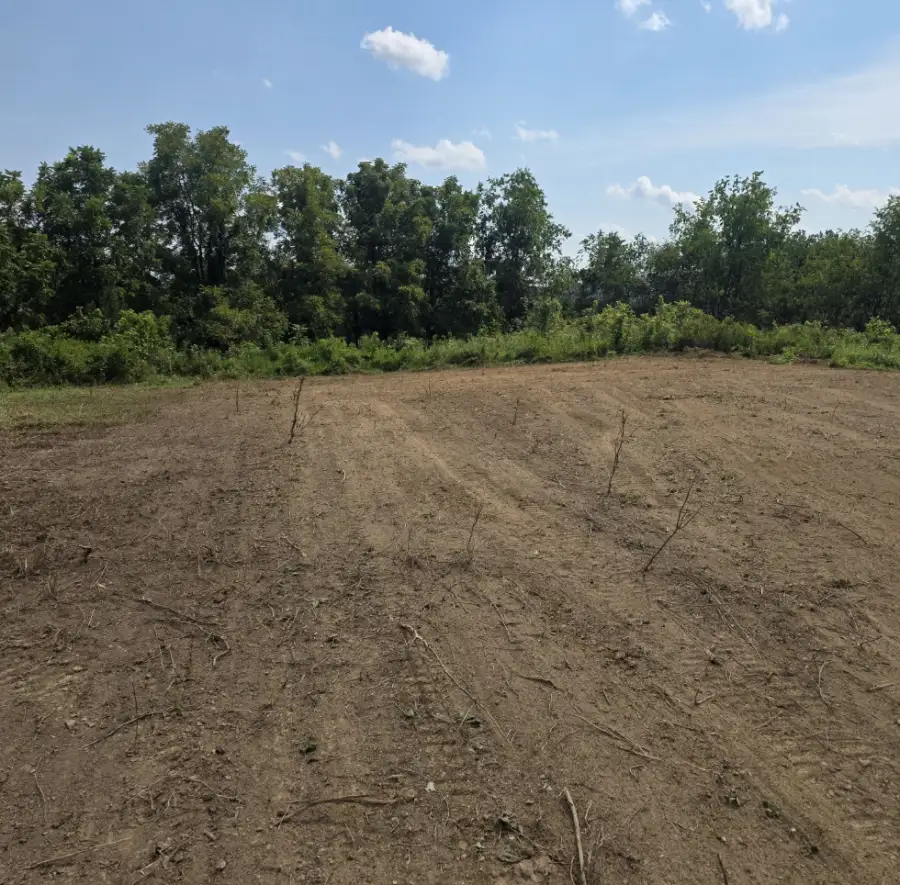
What you are left with is open dirt instead of a thicket: a lot you can walk and lay out, a fence line a crew can work on, a yard you can seed and mow. Because the roots come out, there is far less to sprout back. And if the job grows into more than brush, the same crew handles full land clearing, stump holes and grading.
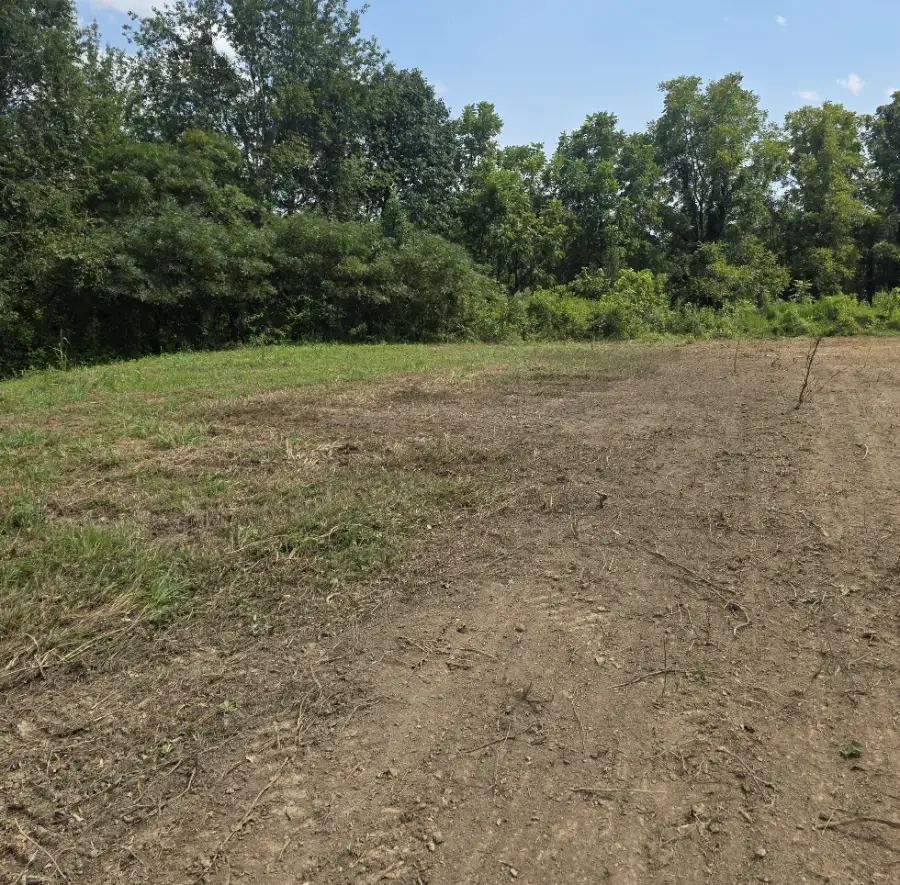
Brush we clear
- Overgrown house lots and back lots
- Briar, blackberry and multiflora rose patches
- Bush honeysuckle and grapevine tangles
- Cedar thickets and sapling stands
- Old home sites and yards gone to brush
- Brushy fence lines and field edges
Why the roots matter
Most brush is hard to kill from the top. Cut a multiflora rose, a honeysuckle bush or a sassafras sapling off at the ground and the root sends up a ring of new shoots, often thicker than before. Cedar is the exception, since a cut cedar does not sprout, but the stump is still there to catch a mower deck. Clearing with an excavator gets under the root crown and lifts it out. The thumb holds the bush while the bucket works the roots loose, and the dirt gets shaken off before the brush goes on the pile. That is slower than mowing over it, and it is the reason the ground stays open.
Brush clearing, brush hogging and mulching
People use these words for different jobs, so it helps to know the difference. A brush hog is a heavy rotary mower. It cuts brush off at the top of the ground and leaves the roots, which is fine for keeping open ground open. A mulching machine grinds standing brush and small trees into chips where they stand, and the roots stay in the ground there too. Clearing with an excavator takes the brush and the roots out and leaves bare dirt that can be smoothed, seeded or built on. Not sure which one your ground needs? Call Trey and ask. He will tell you what he sees.
Old home places and grown-up lots
An old home site gone to brush hides more than briars. Under the honeysuckle there can be a cistern, an old well, a cellar hole, a fallen shed, piles of tin or a stretch of woven wire. Trey works into those places slowly, with the thumb picking brush off the top, so he sees what is underneath before the tracks roll over it. Anything that is a hole gets pointed out to you. Old wire comes out with the brush. Lots in town that have grown up behind a house get the same care, with compact machines that fit through a gate and keep weight off the yard.
Fence lines and field edges
Brush loves a fence. Birds sit on the wire and drop seed, so a fence row turns into a hedge of cedar, honeysuckle, briars and hedge apple faster than anywhere else on a farm. The edges of a field creep in the same way, a few feet a year, until a hay field is noticeably smaller than it was. A short brushy stretch is part of a brush clearing job. A long boundary line where old wire and posts have to come out with the brush is its own kind of work, covered on our fence row clearing page.
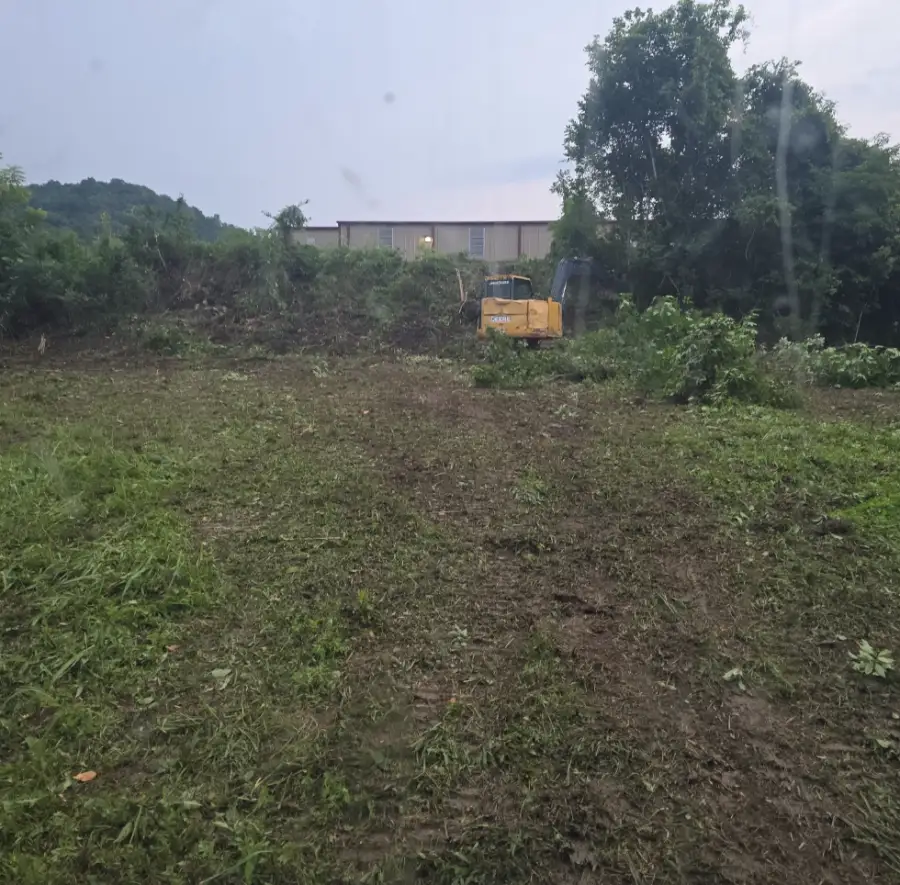
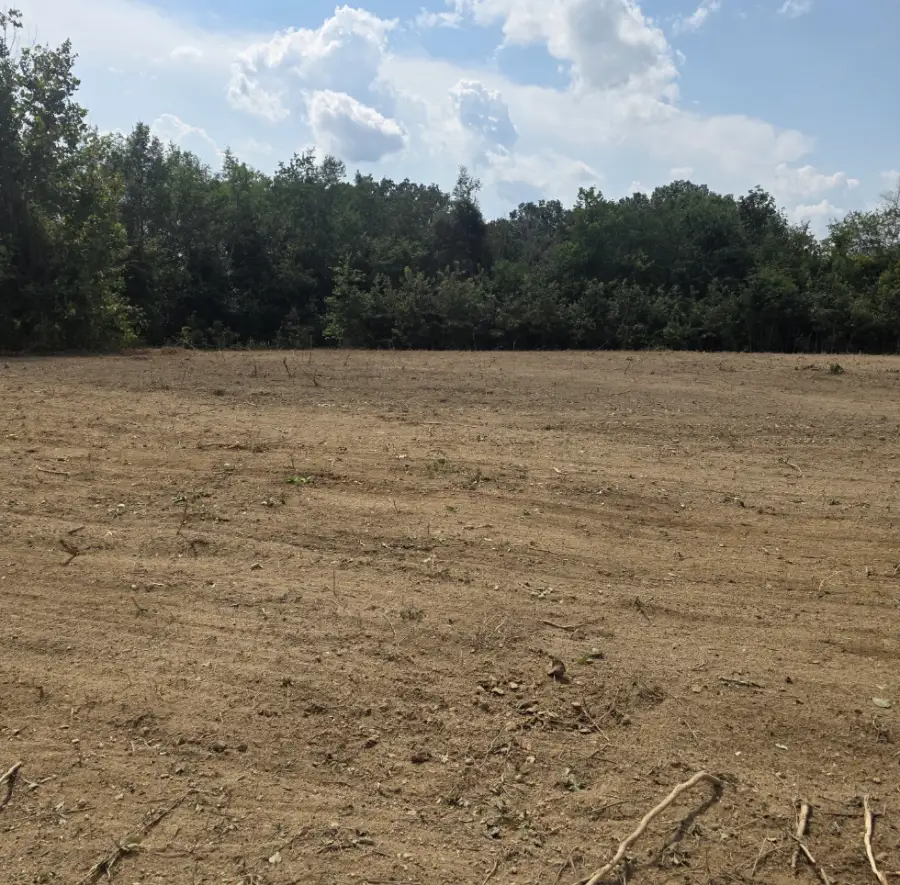
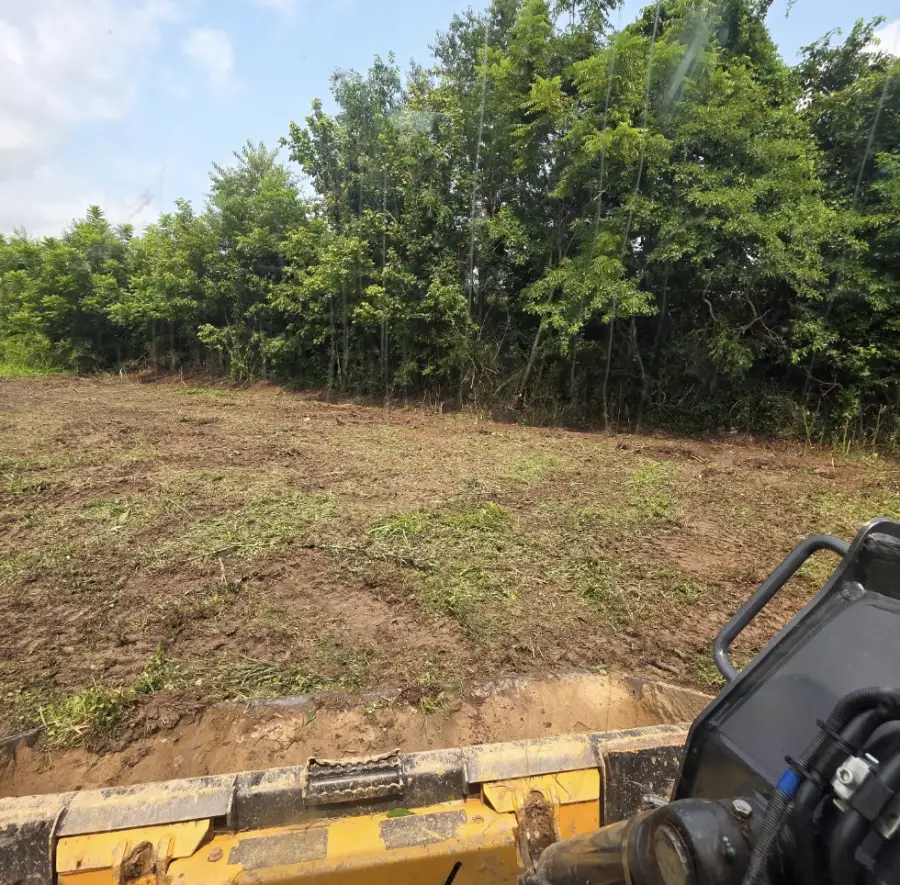
Brush Clearing Across Central Kentucky
Based in Finley, between Campbellsville and Lebanon. Pick your town, or call and ask if we cover it.
Close to home
Regular area
For the right job
Brush Clearing Questions
Not seeing yours? Call (270) 272-8739 and ask Trey, or read the common questions.
- Cost GuideWhat Does Land Clearing Cost in Kentucky?
- GuideCan You Burn Brush Piles After Land Clearing in Kentucky?
- Cost GuideWhat Does Fence Row Clearing Cost in Kentucky?
- Cost GuideWhat Does Yard Drainage Grading Cost in Kentucky?
- Cost GuideWhat Does Trenching for a Water or Electric Line Cost in Kentucky?
- Cost GuideWhat Does Basement Excavation Cost in Kentucky?
What moves the price of brush clearing per acre?
Mostly how thick the brush is and how big it has grown. An acre of briars and small saplings goes much faster than an acre of cedars as big around as your leg. Slope, rock, wet ground, old wire or junk hidden in the brush, how far the machine has to travel to get in, and what you want done with the brush all change the time. Trey looks at the ground and gives you a real number for it. Photos sent ahead of time help. Our land clearing cost guide goes into each one.
What happens to the brush after it is cleared?
Trey pushes it into piles, set in the open and away from the woods line where the lot allows, with the dirt shaken off so it burns cleaner. From there it is your choice. The piles can be burned where the rules allow, left in an out-of-the-way spot as cover for rabbits and birds, or taken off the land. Each one changes the work, so tell Trey which you want when he looks at the job.
Can I burn brush piles in Kentucky?
Usually, with limits. State rules generally allow brush from clearing to be burned on the land where it grew. During the fire hazard seasons in spring and fall, burning within 150 feet of woods or brush is barred during the daytime hours, and county burn bans and city rules can stop it altogether. Our guide to burning brush in Kentucky has the dates and the offices to call. Lighting the piles is the owner's call and the owner's job.
Will the brush grow back after clearing?
Much less than if it were only cut. With the roots out, most of the old plants are gone for good. New growth still comes from seed in the soil and from what birds drop, so bare ground left alone will start to fill again in a few seasons. The fix is to get grass going soon and keep it mowed or grazed. A pasture or yard that gets mowed a couple of times a year will not go back to a thicket.
When is a good time of year to clear brush?
Brush can be cleared any time the ground will carry the machines. Late fall and winter are easier in one way, since the leaves are off and you can see what is in the thicket and where the wire runs. Wet spring ground can slow things down on clay. If you plan to burn the piles, keep the fire hazard season hours in mind when you pick a date.
From First Call to Final Pass
Reach Out
Call or send the form and tell us where the job is and what needs doing.
Walk the Site
We look at the ground, the access and the scope so there are no surprises.
Get a Quote
You get a straight quote and a plan for the work.
We Dig In
The machines roll in and the job gets done right.
Land Clearing
Brush, trees and overgrowth cleared to open up usable land.
Learn moreServiceFence Row Clearing
Overgrown fence rows cleared out so you can see, fix or replace your fence.
Learn moreServiceExcavation
Digging done right with full-size and compact excavators, for any size job.
Learn moreExcavation and pond work near you
Pages for the towns Trey works most, from Campbellsville and Lebanon out to Elizabethtown, Danville, Glasgow and Somerset.
Ready to Get Dirt Moving?
Call Trey or send the details. You'll get a straight answer on what the job takes.