
Gravel Driveways, Approaches & Farm Lanes
New gravel drives cut in and built on a real base, approaches to garages and shops, farm lanes, and washed-out or potholed drives reshaped so they drain.
Done Right the First Time
A gravel driveway looks like the simplest thing on a property: rock on the ground. It is also the thing people pay for over and over. Stone gets spread on topsoil, with no crown and no ditch, and by the second winter it has sunk into the mud or washed into the yard. So another load gets ordered, and the same thing happens to it. The gravel was never the problem. The drive under it was never built.
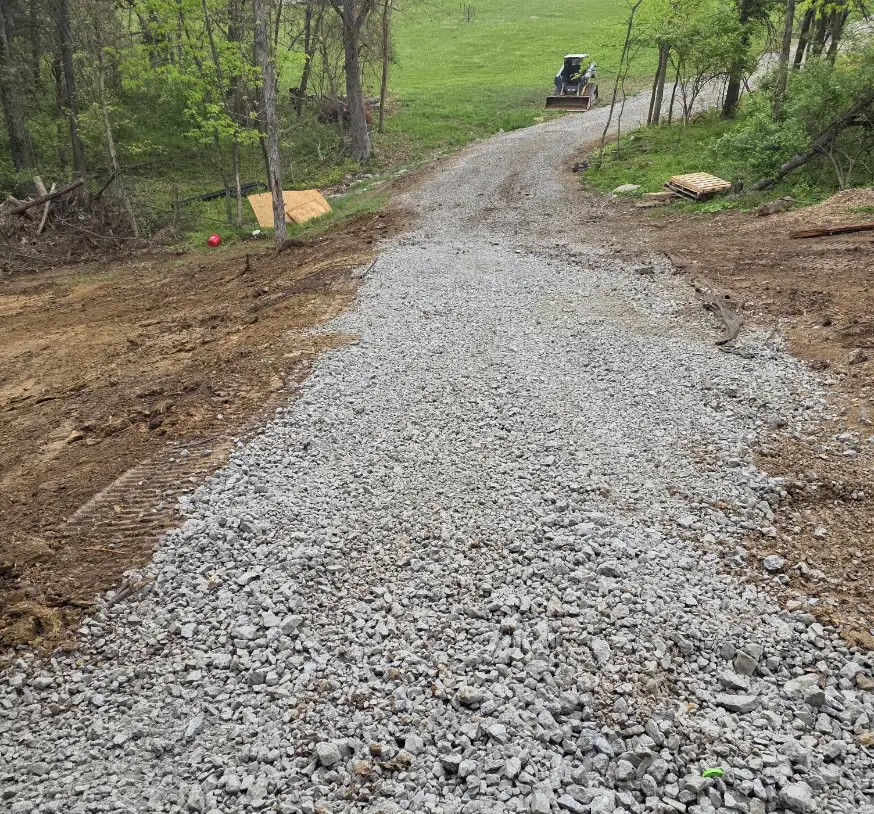
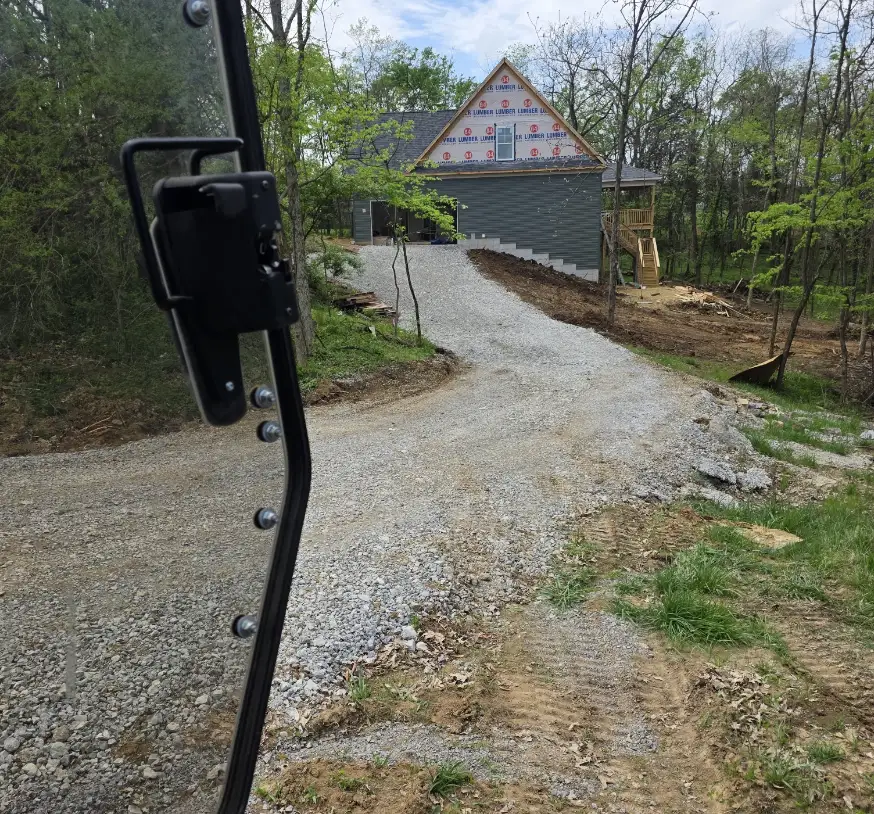
Pistol Ridge Land Services builds gravel driveways, approaches and farm lanes across central Kentucky. Trey cuts the route with an excavator and tracked skid steers, takes off the topsoil, and shapes the ground so water has somewhere to go: a crown down the middle and ditches along the sides. A base of larger stone goes on firm ground, and a finer stone that packs tight goes on top. The stone is part of the job, sized for your drive.
We also fix drives that already exist. If yours has washed out, gone flat or broken into potholes, we cut it back into shape and restone it instead of burying the trouble under more rock. And because drives usually lead to something, we build the pad at the end of them and the approach up to the garage, shop or barn door, so the whole way in is done by one crew.
Driveway and lane work we do
- New gravel driveways for homes and home sites
- Gravel approaches to garages and shops
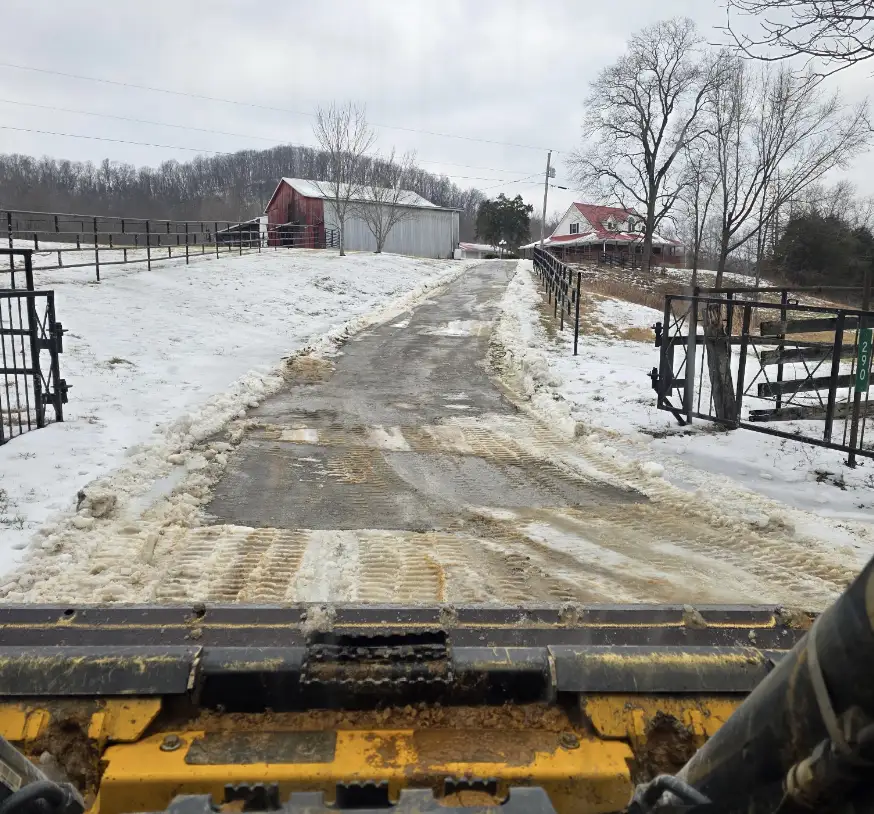
- Farm lanes to barns and back fields
- Washed-out drives reshaped and regraded
- Potholed drives cut, crowned and restoned
- Drive routes cleared through trees and brush
What a contractor does that a load of gravel doesn't
Five things separate a built drive from a graveled path. The route is cut so the grade is something a truck can climb. The topsoil comes off, because black dirt holds water and never firms up. The ground is shaped with a crown and side ditches so rain runs off the drive instead of down it. A base of larger stone goes down and is packed. Then the top stone is spread and graded. Skip any one and the others do not last. None of them comes on a delivery ticket, which is why driveway cost is about more than tons.
Washed-out, rutted and potholed drives
Most tired driveways have the same trouble: they have gone flat or dished, so water sits in them or runs along them. A pothole is a puddle that traffic has pounded deeper. Filling it with loose rock lasts until the next rain. The fix is to cut the surface down below the bottom of the holes, pull the stone that has crept to the edges back in, rebuild the crown and reopen the ditches. Then new stone goes where it is thin. A reshaped drive often needs less new stone than the owner expected.
Approaches, farm lanes and drives through the woods
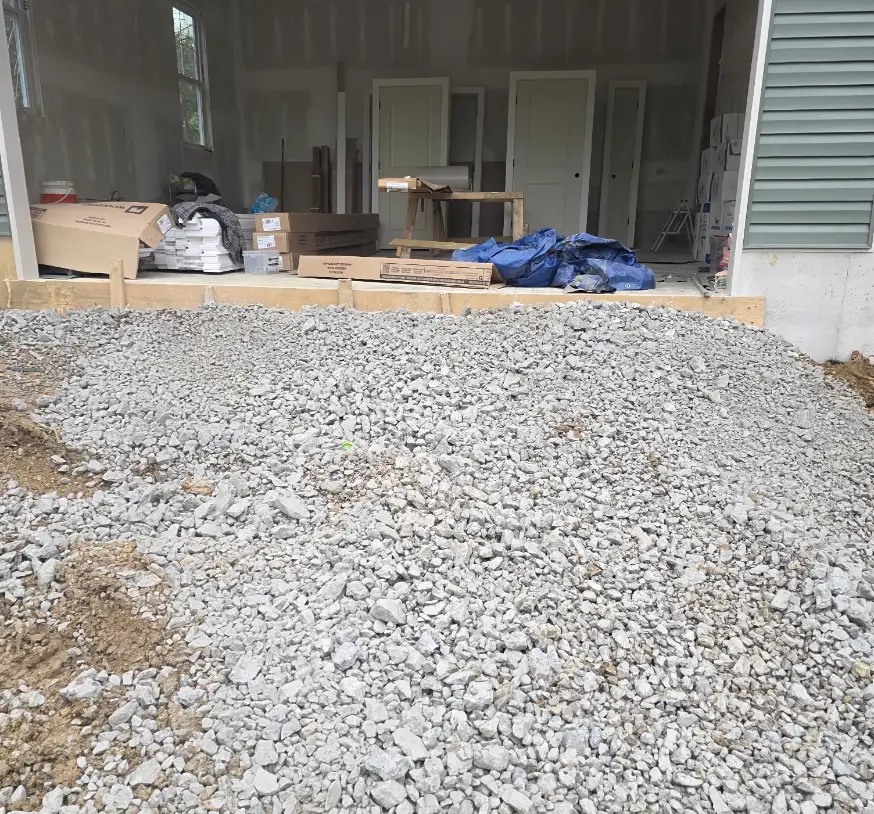
An approach is the last stretch up to a garage, shop or barn. It has to meet the floor at the right height and slope away so water does not run in. We build those with pole barn pads and house pads all the time. Farm lanes have to carry trailers and feed trucks across ground that is soft half the year, so the base matters most. Drives to wooded home sites start with clearing the route and pulling the stumps, then cutting the grade. One note: pipe under a drive is set by a pipe installer or the road department, not by us.
Gravel Driveways Jobs We've Done
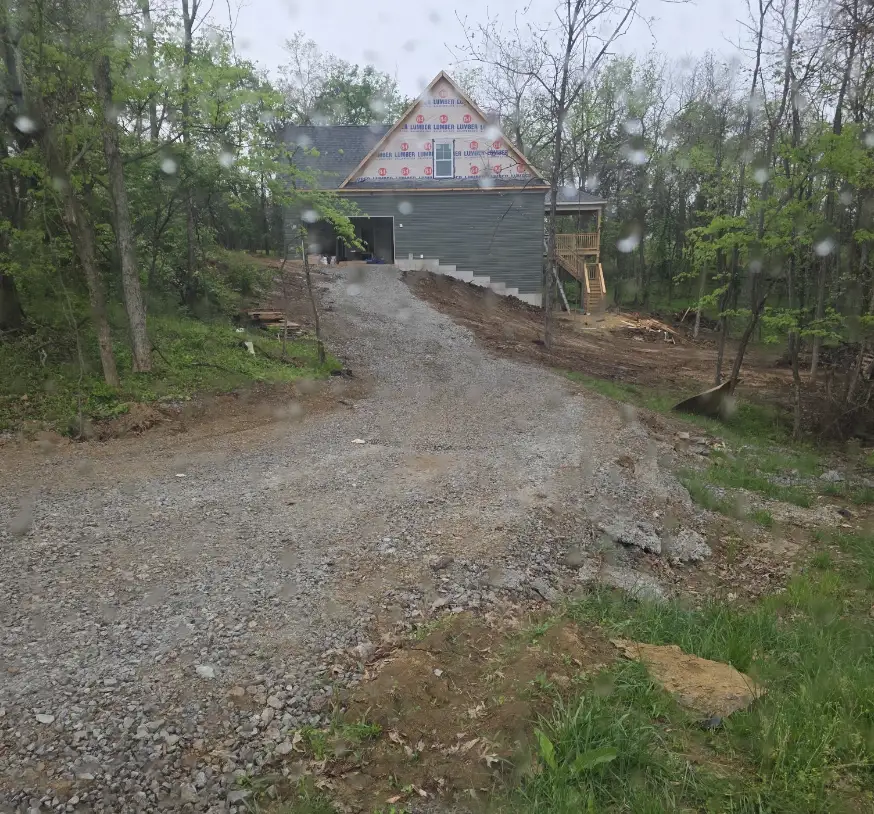
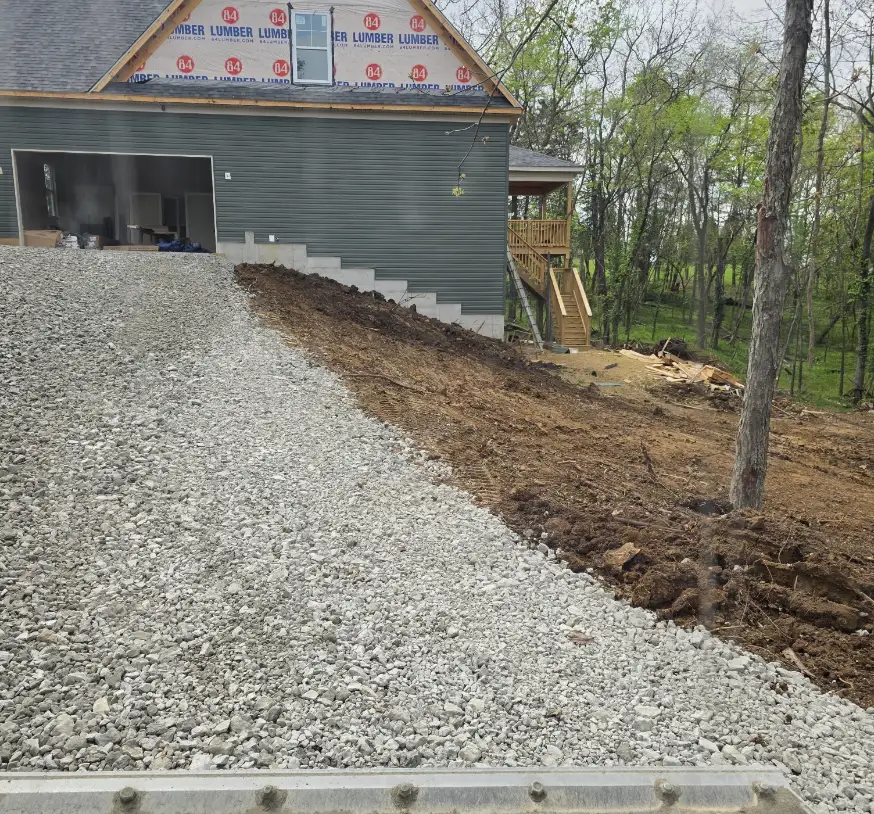
Real photos from Pistol Ridge job sites. See more work.
From First Call to Final Pass
Reach Out
Call or send the form and tell us where the job is and what needs doing.
Walk the Site
We look at the ground, the access and the scope so there are no surprises.
Get a Quote
You get a straight quote and a plan for the work.
We Dig In
The machines roll in and the job gets done right.
Gravel Driveways FAQ
Do you deliver gravel?
Not as a stand-alone product. We build and reshape driveways, and the stone for the job comes with it, in the sizes and amounts the drive needs. If you only want a load dropped, a quarry or stone seller is who to call.
What kind of gravel goes on a driveway?
Usually two kinds. A larger, coarse stone goes down first as the base. A finer crushed limestone with the dust left in, which many people here call dense grade or crusher run, goes on top because it packs into a tight surface. Round creek gravel rolls under a tire and does not lock together.
How do I stop my gravel driveway from washing out?
Get the water off it. A drive that is flat or dished carries rain down its length, and moving water carries stone. A crown in the middle, ditches along the sides and places for water to turn out on a hill are what stop it. That is a reshaping job, not a gravel order.
Can you regrade my existing driveway instead of building a new one?
Often, yes. If the route is good and there is still stone in it, we can cut out the potholes, pull the stone back from the edges, restore the crown and ditches and add stone where it is thin. If it was laid on topsoil with no base, the soft sections may need to be dug out and rebuilt.
Do you install culverts or pave driveways?
No. Culvert pipe and paving are other trades. For pipe at a road entrance, talk to the county road department or the state highway office about what is required and who sets it. For asphalt or concrete, call a paving or concrete crew. We build the gravel drive, the base and the grade they work from.
More reading: What Does a Gravel Driveway Cost in Kentucky?
Gravel Driveways Across Central Kentucky
Based in Finley, between Campbellsville and Lebanon. Pick your town, or call and ask if we cover it.
Gravel Driveways pages for your town
Ready to Get Dirt Moving?
Call Trey or send the details. You'll get a straight answer on what the job takes.