

Farm Pond Digging in Somerset, KY
Somerset is a lake town, but Lake Cumberland does not water cattle on a farm out toward Science Hill or Eubank. Pulaski County landowners still need ponds of their own, and the ground changes a lot across the county. Trey at Pistol Ridge Land Services looks at the site, digs test holes and builds the dam from the clay that is there. For a quote, call Trey at (270) 272-8739.
- 30 Years Experience
- Full-Size & Compact Machines
- Straight Quotes
Pond Digging in Somerset
A lake town with farms on the uplands
Lake Cumberland was finished in 1950 and turned Somerset into a recreation center. Since then, most new housing in the area has followed the water rather than the farm roads.
Away from the shoreline, Pulaski County is mostly upland, from about 1,150 feet in the west down to around 950 at Somerset, with hills and knobs rising 200 to 400 feet above that. That farm ground is where the pond calls come from: stock water, a pond to look at from the porch, or a place to fish that is not a crowded lake.
Three kinds of ground in one county
The Kentucky Geological Survey describes karst across the middle of Pulaski County, with sinkholes, sinking creeks and springs. In the eastern third, the rock changes to sandstone and shale. Along the Cumberland Escarpment in the southeast, steep cliffs line many of the valleys.
Each one asks something different of a pond. On karst, the worry is water finding a way down. On the sandstone and shale side, it is whether the soil has enough clay to build a tight dam. On steep ground, it is how tall a dam has to be to back up any real amount of water.
Test holes before the staking
UK pond guidance calls for borings along the line of the dam to confirm a clay base, and about four per acre across the basin when the soil looks uniform. It names late summer and early fall as the best time to test.
Trey digs those holes with the excavator and looks at what comes up. Tight clay that holds its shape in the hand is a good sign. Gravelly or sandy soil, or rock close to the surface, means the site needs rethinking before any money goes into it. The will my land hold a pond guide explains what to look for.
Building the dam
The dam starts with a core trench, which UK describes as about three feet deep and a third the width of the finished dam. Clay goes back into it in six- to twelve-inch layers, each one packed, and the fill keeps rising the same way above ground.
Inside and outside slopes of about 3 to 1 give a dam that can be mowed and will not slump. The emergency spillway is cut in firm ground at one end and grassed so a heavy storm passes around the fill. Seed goes on the bare dam as soon as it is shaped.
The Somerset USDA office and cost share
The Somerset USDA Service Center on Eagle Creek Drive houses the NRCS office for Pulaski and McCreary counties. NRCS offers conservation planning and technical assistance, which makes it a sensible first call when a pond is meant for livestock.
The Pulaski County Conservation District is at the same address. District offerings can include state cost share, CAIP and conservation equipment, and they vary by county, so ask what is open before the dig is booked. More is in the pond cost share guide.
Permits, locates and getting a quote
The Kentucky Division of Water regulates dams 25 feet or higher, or holding 50 acre-feet or more, and building one takes a Dam Safety permit. Upland farm ponds are usually far below that. Locates go through Kentucky 811 at least two full business days ahead, and the call is free.
Trey quotes after seeing the site, since the size, the soil and where the spoil goes all change the work. He brings 30 years of experience to it. Clearing the basin is often the first step, through land clearing in Somerset. The full pond digging service and the Somerset page cover the rest.
What that covers
- Stock water. Ponds for cattle on upland pasture away from the lake.
- Recreation ponds. Deeper ponds shaped for fishing and a clean, mowable bank.
- Packed clay dams. Core trench and layered fill built from the site's own clay.
- Spillways and seed. Overflow cut around the dam and banks left ready to seed.
Somerset, KY
The Pulaski County seat on Lake Cumberland's north side, with rolling farm ground and lake lots.
Town pageAlso in SomersetLand Clearing in Somerset, KY
See the pageAlso in SomersetBuilding Pads in Somerset, KY
See the pageThe servicePond Digging
Farm and stock ponds dug, the dam keyed and compacted, the spillway set so the pond holds water.
Main service pageFrom first call to final pass
Reach out
Call or send the form and tell Trey where the job is and what needs doing.
Walk the site
Trey looks at the ground, the access and the scope so there are no surprises.
Get a quote
You get a straight quote and a plan for the work.
The machines dig in
Excavator and tracked skid steer roll in and the job gets done right.
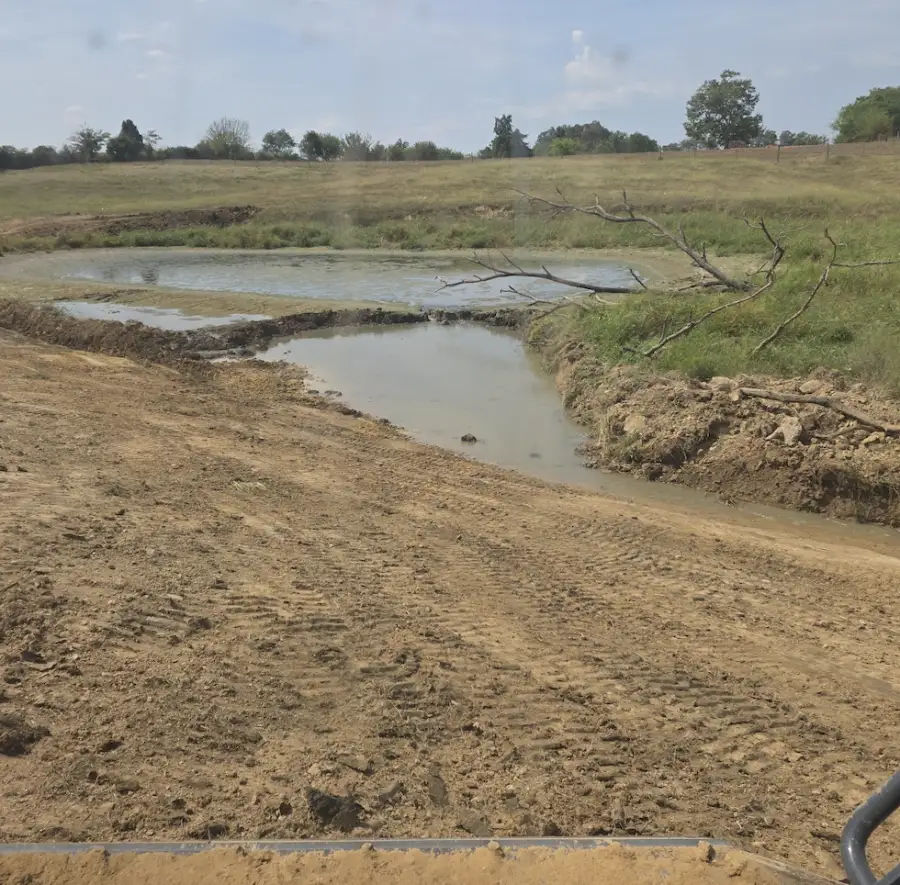
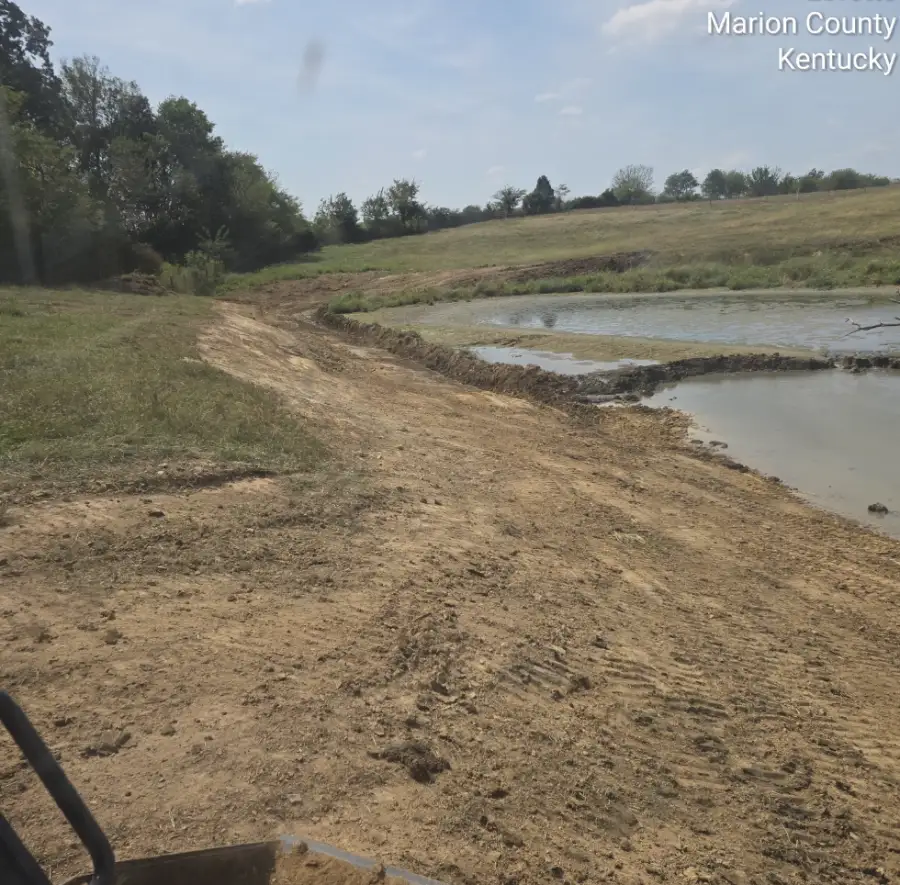
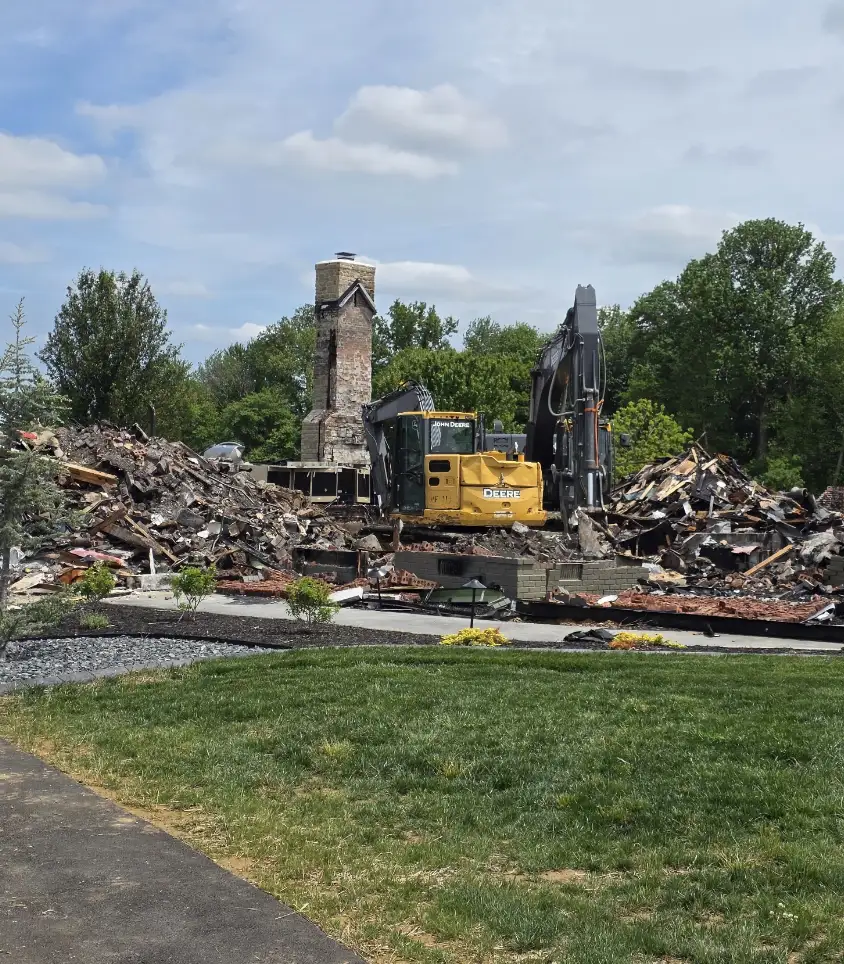
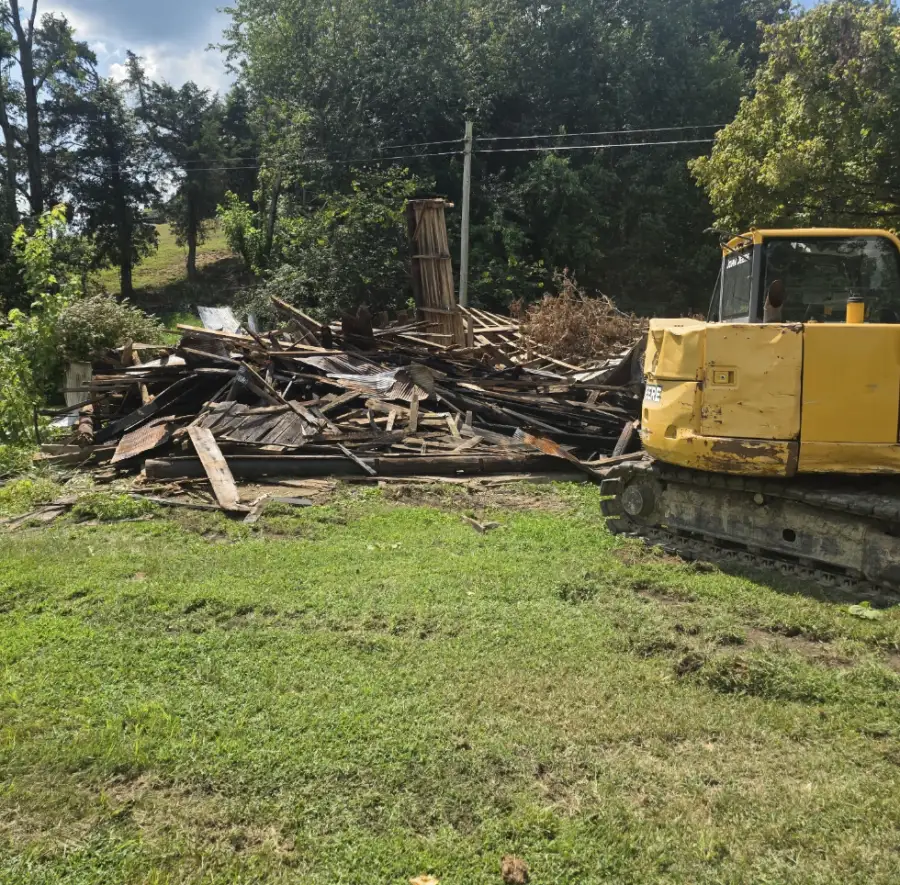
Photos of his work.
These are photographs from actual jobs. See more recent work. Or read about the full pond digging service.
Questions people ask
Not seeing yours? Call (270) 272-8739 and ask Trey, or read the guides.
Can I dig a pond on land near Lake Cumberland?
On your own land, generally yes, as long as the dam stays under the state thresholds. The Corps of Engineers owns a strip of land around the lake, though, and no digging or clearing should cross onto it. Know where your line is before any machine unloads.
Will karst under my land drain the pond?
It can. UK warns that ponds in karst areas may fail to hold water even when they look properly sited and built. In the middle of Pulaski County, test holes and a careful walk for sinkholes come before any digging, and a site that looks risky gets moved.
What time of year is best for a pond in Pulaski County?
It is a balance. UK says soil testing goes best in late summer and early fall, and dry ground is easier on machines. KGS notes that ponds built in very dry weather are more apt to leak, so the clay has to be packed right. The best time to dig a pond guide weighs it up.
How deep should a farm pond be?
UK suggests a maximum of 8 to 10 feet for a fish pond, with edges kept at least 2.5 to 3 feet deep to hold back rooted weeds. A stock pond can be laid out differently. The pond depth guide goes through both.
Do you need to see the land before quoting?
Yes. Trey walks the site, checks how much ground drains to it and digs test holes if needed, then gives you a figure. Pond work depends too much on soil and slope to price over the phone, and there are no published rates.
Other work he takes on
Most jobs end up being two or three of these at once, and they get quoted together.
Pond Digging in other towns
Yard Drainage
Standing water and wet foundations fixed by reshaping the ground.
Learn morePond Cleanout
Silted-in ponds cleaned out, banks reshaped and dams reworked.
Learn moreDemolition
Houses, barns and outbuildings taken down and cleaned up.
Learn morePond Digging
New ponds dug and shaped on Kentucky farm ground.
Learn moreGravel Driveways
New gravel drives and farm lanes built, washed-out drives reshaped.
Learn moreBuilding Pads
Building, shop and home pads built level and solid.
Learn moreFree estimate in Somerset.
Send the details and Trey will come out and look at it. If it is easier to talk it through, call him directly.
Campbellsville, Lebanon, Springfield, Bardstown, Danville, Elizabethtown, Greensburg, Columbia, Hodgenville, Liberty and the rest of central Kentucky.
Need pond digging in Somerset?
Call Trey or send the details. You'll get a straight answer on what the job takes.