

Pond Digging on Karst Ground Around Glasgow, KY
Plenty of farms around Glasgow could use a stock pond, and plenty of Barren County ground would rather send its water into a cave. Trey at Pistol Ridge Land Services digs new farm ponds here with full-size and compact excavators, but first he looks hard at where the water is meant to stay and where it might slip away. For a quote, call Trey at (270) 272-8739.
- 30 Years Experience
- Full-Size & Compact Machines
- Straight Quotes
Pond Digging in Glasgow
Sinkhole country north of Beaver Creek
Glasgow sits on the karst plain that covers the middle and northeast of Barren County. The Kentucky Geological Survey describes that plain as sinkholes, sinking creeks, springs and caverns, with little water running on the surface. Beaver Creek marks roughly its southern edge.
South and southeast of there, the county becomes a plateau cut by ordinary creeks, and water behaves the way most people expect. That split matters more for a pond than for almost any other job, because a pond only works where water stays on top of the ground.
Why a good-looking site can still leak
University of Kentucky pond guidance is blunt about karst: a pond that seems well placed and well built can still fail to hold water. The state's conservation office adds leakage, collapse and new sinkholes nearby to the list of things that can go wrong on this kind of ground.
None of that means a Glasgow farm cannot have a pond. It means the site gets more attention before the first bucket goes in. Trey walks the drainage, looks for low round depressions and digs test holes where the dam and basin will sit to see what is underneath.
Clay, compaction and timing
A dam needs soil with real clay in it, and UK puts the figure at 20 to 25 percent for dams and spillways. The core trench is cut down into tight ground below the dam line, then filled with clay in thin layers, each one packed before the next goes on.
Kentucky Geological Survey notes written for Warren County, Barren's karst neighbor to the west, add two points. Ponds built in dry weather are more apt to leak than ponds built in wet weather, and on structured soils a compacted clay blanket or a liner may be what keeps the water in. The best time to dig a pond guide covers the seasons.
Watershed, depth and the spillway
For Kentucky, UK figures one to two acres of watershed for every acre-foot of water a pond will hold. Too little drainage and the pond sits low all summer. Too much and every storm pushes hard on the dam, which is exactly what the emergency spillway is there for.
The spillway is cut around one end of the dam in undisturbed ground and grassed, so a big rain leaves without topping the fill. Depth is set to what the pond is for, whether that is cattle water or fishing. The watershed size guide goes through the numbers in more detail.
Help from the Glasgow NRCS office
The USDA's Natural Resources Conservation Service has a Glasgow Service Center on YMCA Way that serves Barren County. In karst country, state conservation guidance specifically says to consult conservation technical assistance specialists before building a pond, and that office is where those people are.
Kentucky's state cost share program is handled through county conservation districts and has funded Barren County farm projects, and its practice list includes livestock water sources. Whether a pond fits depends on the program year, so ask before the dig is booked. The pond cost share guide explains how it usually works.
Locates, the dam size line and a price
Kentucky 811 gets the locate request at least two full business days before the excavator unloads. A farm pond rarely comes near the Division of Water's dam safety thresholds of 25 feet high or 50 acre-feet stored, but a big one in a deep hollow can, and that takes a state permit.
There are no published prices. Trey brings 30 years of experience to reading a site and gives you a figure once he has walked it. Clearing the basin is often the first step, through land clearing in Glasgow. The pond digging page has the full scope, and other Barren County work is on the Glasgow page.
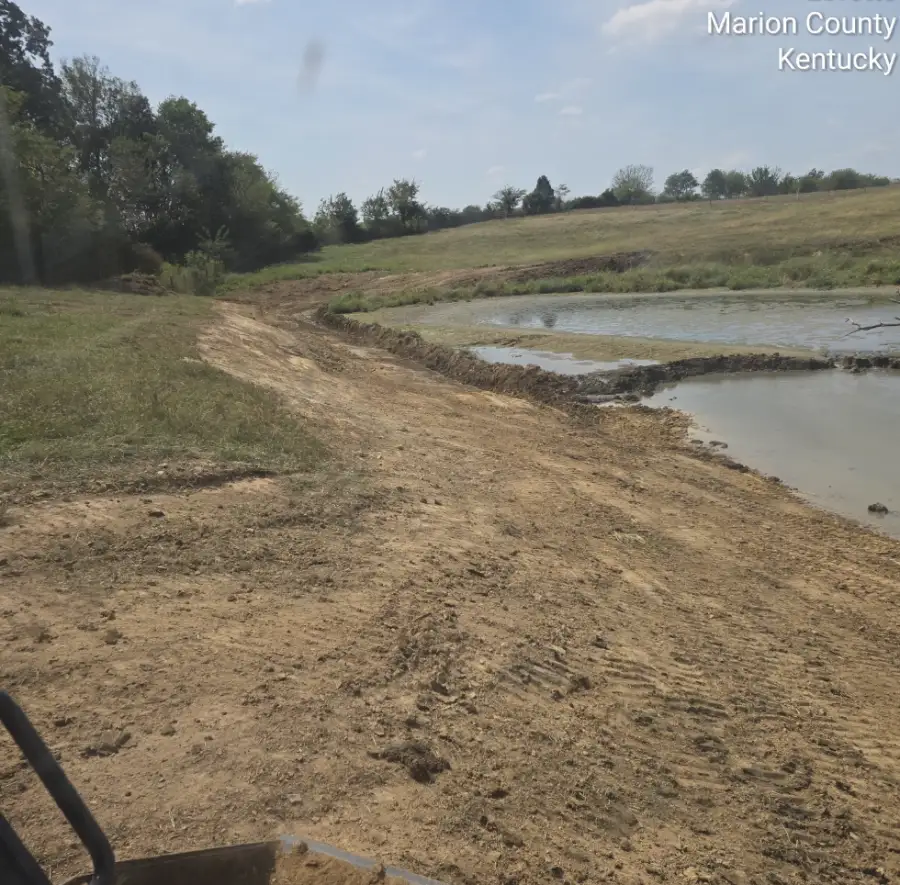
Pond Digging
Farm and stock ponds dug, the dam keyed and compacted, the spillway set so the pond holds water.
See the serviceTalk to Trey(270) 272-8739
Tell Trey where the farm is in Barren County and whether you have noticed sinkholes nearby. He will walk the site before quoting.
Call nowWhat that covers
- Stock ponds. Watering ponds for pasture, sized to the ground that drains to them.
- Keyed clay dams. Core trench cut to tight soil and filled in packed layers.
- Spillways. Grassed overflow cut so a hard rain goes around the dam.
- Site checks. Test holes and a walk for sinkholes before the basin is dug.
Glasgow, KY
The Barren County seat south of Campbellsville, near Barren River Lake, with farms and karst ground all around.
Town pageAlso in GlasgowLand Clearing in Glasgow, KY
See the pageAlso in GlasgowBuilding Pads in Glasgow, KY
See the pageThe servicePond Digging
Farm and stock ponds dug, the dam keyed and compacted, the spillway set so the pond holds water.
Main service pageGlasgow and the towns nearby
Barren County farms toward Hiseville, Temple Hill, Lucas and Austin are covered from Glasgow. East along the Cumberland Parkway, Adair County is also on UK's list of karst counties, and pond digging in Columbia deals with the same questions. Closer to Trey's base there is Campbellsville, and the service area shows the rest.
From first call to final pass
Reach out
Call or send the form and tell Trey where the job is and what needs doing.
Walk the site
Trey looks at the ground, the access and the scope so there are no surprises.
Get a quote
You get a straight quote and a plan for the work.
The machines dig in
Excavator and tracked skid steer roll in and the job gets done right.
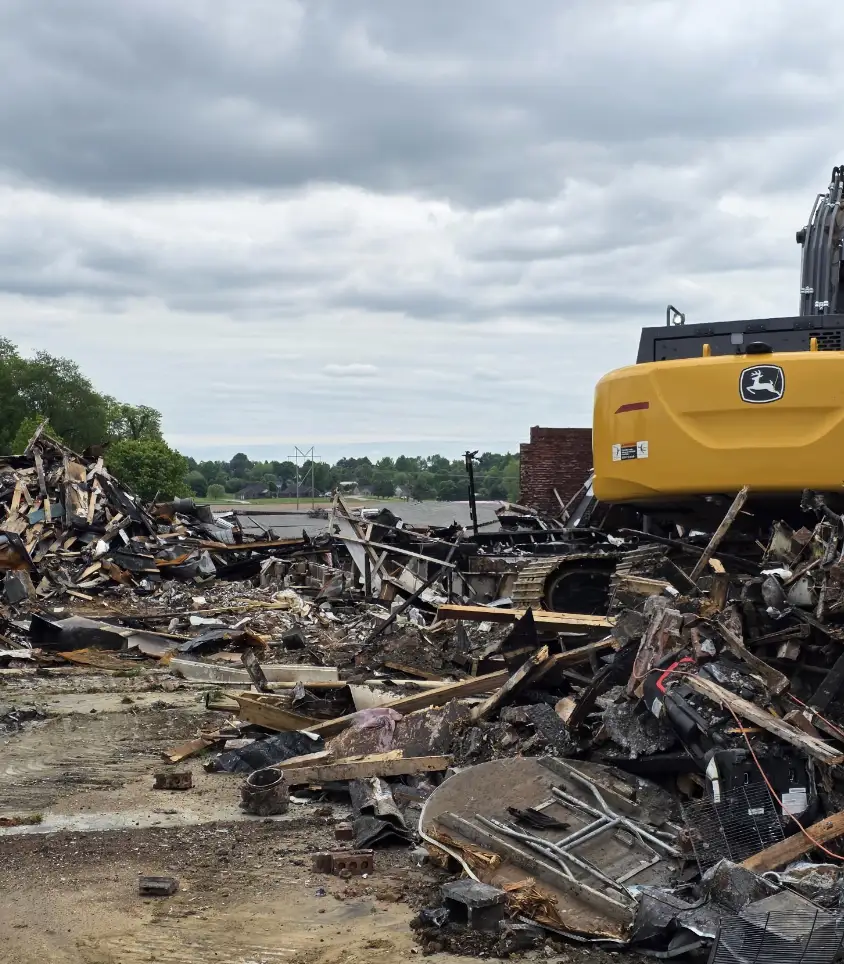
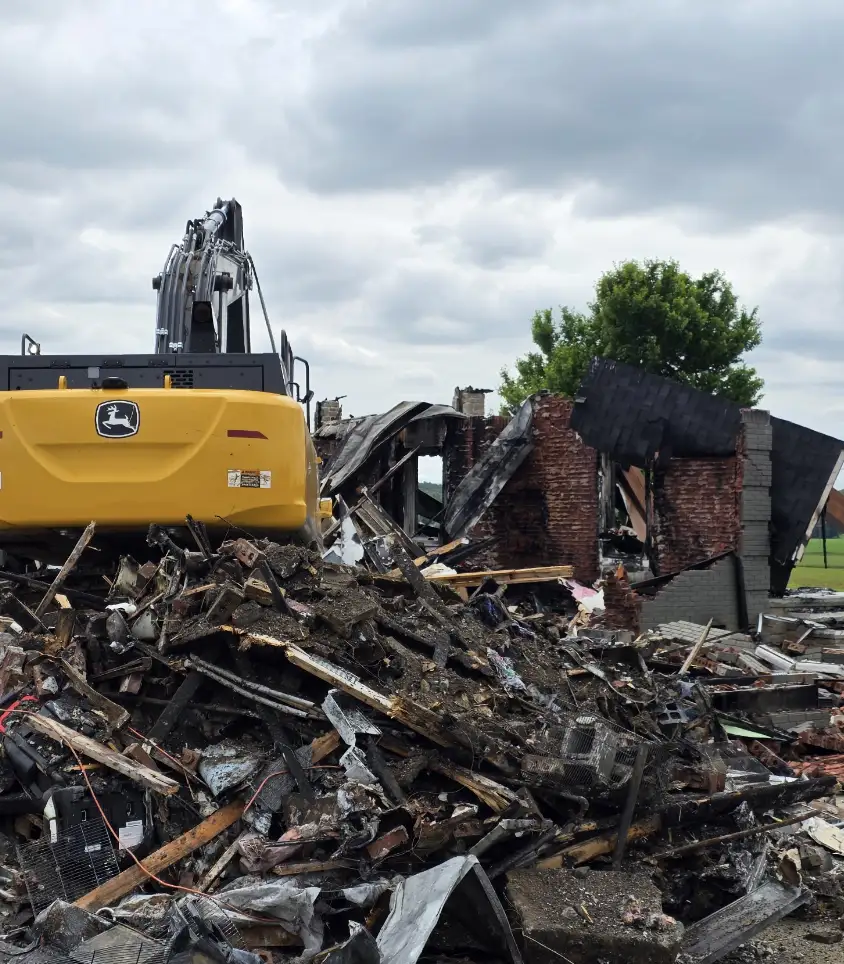
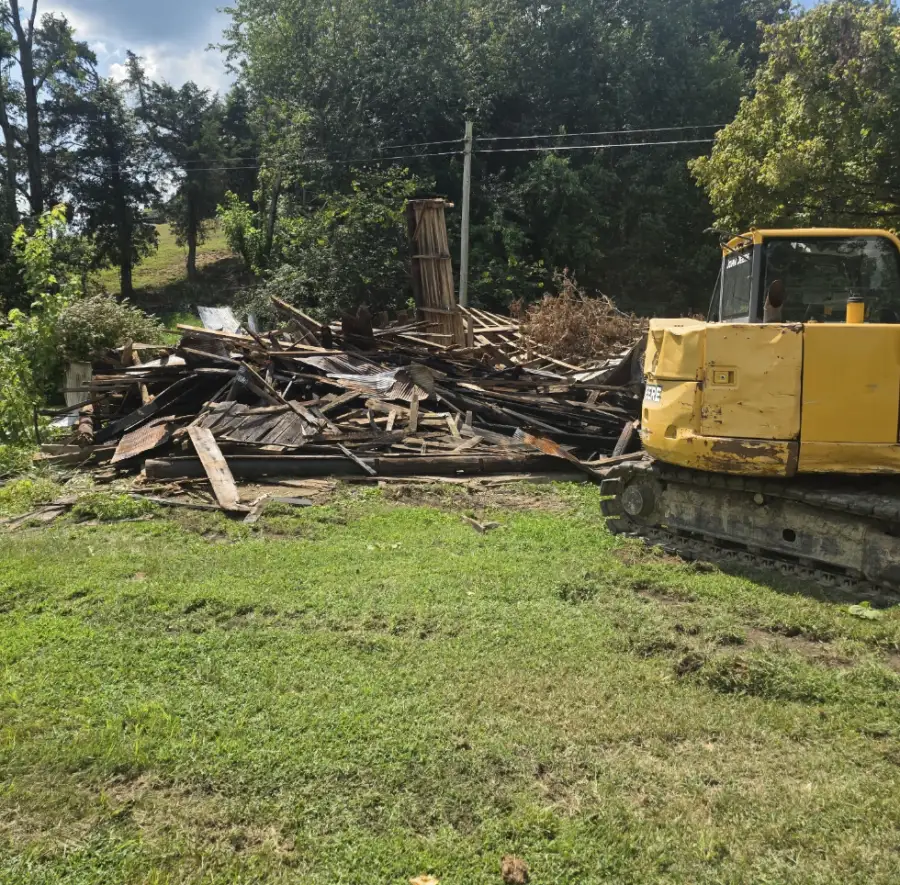
Photos of his work.
These are photographs from actual jobs. See more recent work. Or read about the full pond digging service.
Questions people ask
Not seeing yours? Call (270) 272-8739 and ask Trey, or read the guides.
Will a pond hold water on my farm near Glasgow?
It depends on where it sits. On the karst plain through the middle of Barren County, some sites hold and some drain into the rock. Test holes, a careful look for sinkholes and enough clay for the dam are the first checks. The will my land hold a pond guide lists the signs.
Can you turn a sinkhole into a pond?
It is usually a poor bet. A sinkhole is where surface water already goes underground, and state conservation guidance warns that ponds on karst can leak, collapse or open new sinkholes nearby. A site away from it, on tighter ground, is the safer choice.
Do I need a permit for a farm pond in Barren County?
The state Division of Water permits dams 25 feet or taller, or holding 50 acre-feet or more, and most farm ponds are far smaller. If the farm is near town, also ask the Joint City-County Planning Commission at Glasgow City Hall. The pond permit guide has more.
How big a pond can my land support?
The drainage area sets the limit. A one-acre pond averaging six feet deep holds about six acre-feet, so by UK's rule of thumb it wants roughly 6 to 12 acres draining to it. Trey measures what feeds the site and sizes the pond to match before anything is staked.
Do you stock fish or treat the water?
No. Pistol Ridge does the dirt work: basin, dam, spillway and banks shaped and ready for seed. Stocking and water management are for a pond company or the county extension office once the pond has filled.
Other work he takes on
Most jobs end up being two or three of these at once, and they get quoted together.
Pond Digging in other towns
Yard Drainage
Standing water and wet foundations fixed by reshaping the ground.
Learn morePond Cleanout
Silted-in ponds cleaned out, banks reshaped and dams reworked.
Learn moreDemolition
Houses, barns and outbuildings taken down and cleaned up.
Learn morePond Digging
New ponds dug and shaped on Kentucky farm ground.
Learn moreGravel Driveways
New gravel drives and farm lanes built, washed-out drives reshaped.
Learn moreBuilding Pads
Building, shop and home pads built level and solid.
Learn moreFree estimate in Glasgow.
Send the details and Trey will come out and look at it. If it is easier to talk it through, call him directly.
Campbellsville, Lebanon, Springfield, Bardstown, Danville, Elizabethtown, Greensburg, Columbia, Hodgenville, Liberty and the rest of central Kentucky.
Need pond digging in Glasgow?
Call Trey or send the details. You'll get a straight answer on what the job takes.